
The first sparks of the American Revolution ignited during the spring of 1775, while Lord William Campbell prepared to sail from England to his post as Governor of South Carolina. His contacts and conversations during that turbulent year presaged an uncertain reception in Charleston. As civil war erupted in Massachusetts, the king’s ministers empowered Campbell to choose his future course—either trim the sails of unruly Carolina, or abandon the provincial ship of state.
Today’s program inaugurates a short series exploring dramatic events that occurred in and around the colonial capital of South Carolina during the tumultuous year 1775. Scores of books and articles published over the past two centuries have provided readers with voluminous local details from the early stages of the American Revolution, but I hope to offer some fresh insight into this pivotal year by adopting a different perspective. While most histories of the War for Independence focus on the actions and attitudes of American colonists, I want to introduce some new details and new characters to illuminate the British point of view. Lord William Campbell, South Carolina’s final royal governor, plays a central role in this narrative, and, as an officer of the Royal Navy, anchors an under-appreciated view of the rebellion witnessed by the men and women, both black and white, aboard His Majesty’s warships in Charleston Harbor.
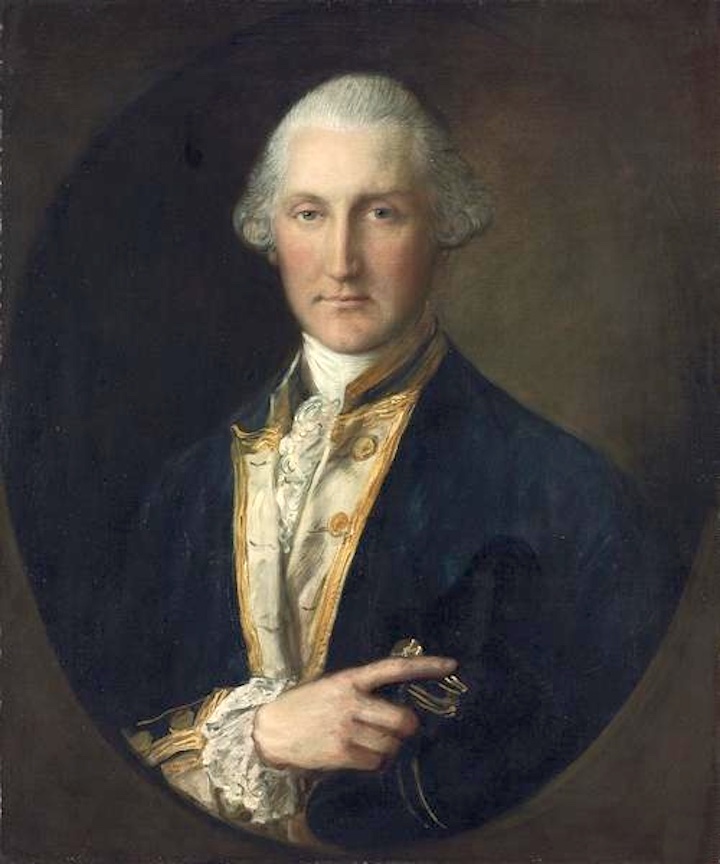
At the conclusion of the previous episode, the Governor of Nova Scotia, Lord William Campbell, learned of his appointment as chief executive of South Carolina, the British colony in which he and his wife, Sarah Izard Campbell, jointly owned a significant amount of income-producing property. Lord and Lady William, with their two children, sailed from Halifax in late October 1773 and disembarked in Portsmouth Harbor, on the south coast of England, before the end of November. The family then returned to their townhouse in the Soho neighborhood of London for a brief respite, after which the governor consulted with government officials about his future administration of the prosperous Southern colony. Campbell and his wife might have anticipated returning to friends and family in South Carolina at some point in 1774, but a succession of events, both personal and political, delayed their departure for more than a year.
Trouble was already brewing in North America before the Campbells sailed for England in the autumn of 1773. Frustration with a colonial tax on tea, the last of the so-called Townshend duties imposed in 1767, led to a series of tea-related protests in port communities from South Carolina to Massachusetts. News of the destructive Boston Tea Party in December 1773 reached England during the early weeks of 1774, triggering intense displeasure within the highest ranks of British government. Parliament responded that March by ratifying an act to close the Port of Boston, the first in a series of punitive measures collectively known as the as the Coercive Acts, or Intolerable Acts, intended to suppress American criticism of British colonial administration. General Henry Seymour Conway, brother-in-law to Governor Campbell, strenuously opposed Parliament’s efforts to silence American dissent, as he had done nearly a decade earlier in opposition to the infamous Stamp Act of 1765. So too did Lord William’s colonial brother-in-law, Ralph Izard Jr., who was then in London with his new bride, Elizabeth Stead Izard.[1] Campbell’s executive appointment, held at the king’s pleasure, obliged him to embrace the government’s position, however, regardless of his personal ties to supporters of the American cause.
In London during the spring of 1774, for example, Lord William conversed occasionally with Henry Laurens, a prominent South Carolina merchant and planter who had amassed a fortune through the exploitation of enslaved laborers. Laurens had ventured abroad to place his sons in exclusive private schools, and the governor found him a somewhat reluctant critic of British colonial policy at that moment. During one of their meetings that April, Campbell confided to Laurens that Lady William was expecting another child, and would, therefore, “not be in a condition for going to sea till November or December.” The governor-in-waiting made good use of the unexpected delay and pursued advice gleaned from various provincial constituents. During the ensuing summer, he successfully lobbied the British government to remove a small but extremely controversial point of colonial economic policy that had capsized the administration of South Carolina’s previous governor, Lord Charles Greville Montagu.[2]
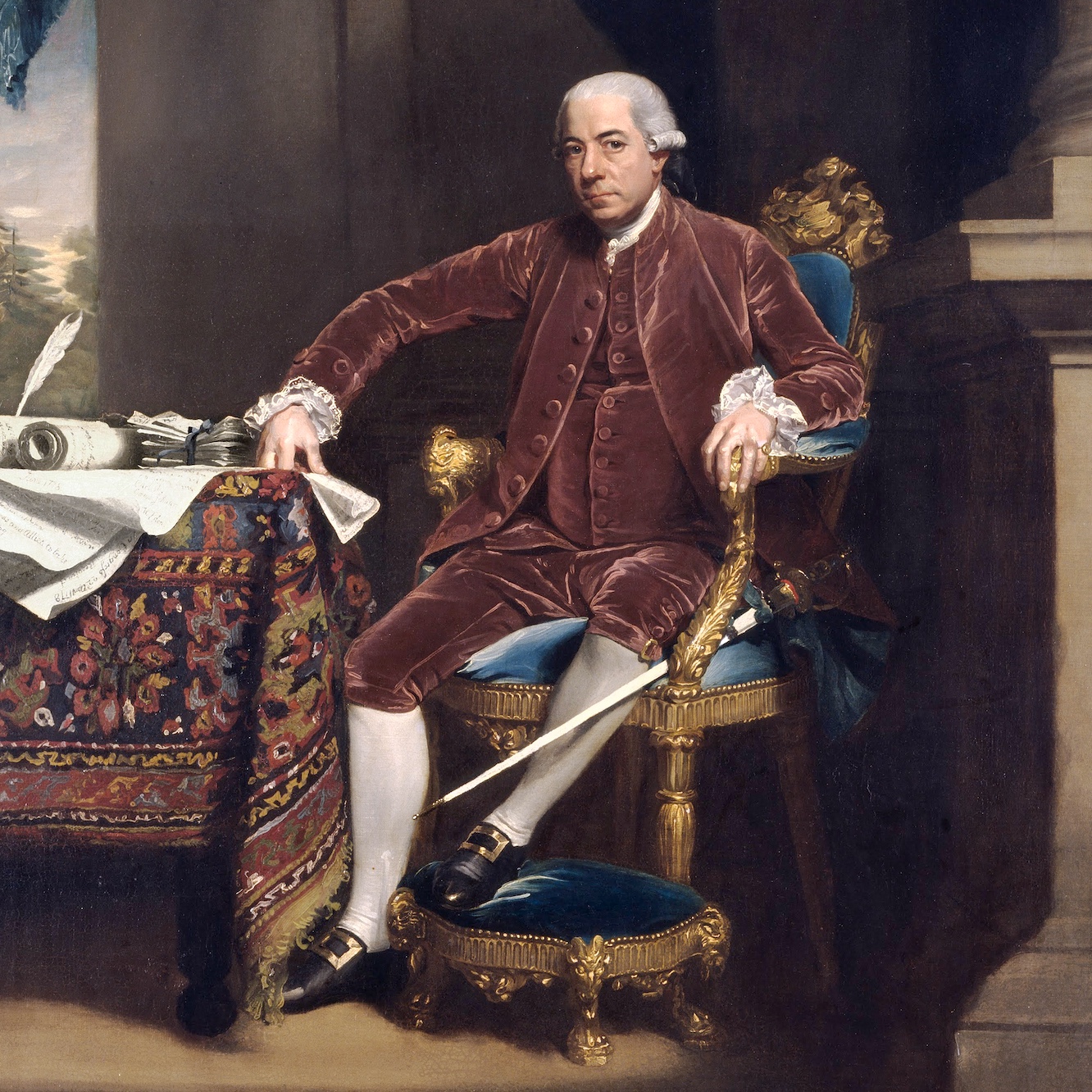
News of the punitive Boston Port Act arrived in Charleston at end of May 1774, followed shortly thereafter by reports of the other Coercive Acts ratified by Parliament that spring. Disgruntled eligible voters (that is, white male property owners) in South Carolina and eleven other North American colonies elected delegates that summer to attend a novel convention in Philadelphia, commencing in September. Among them were at least two men familiar to Lord William Campbell—Henry Middleton, one of the trustees managing Campbell’s plantations in South Carolina, and Christopher Gadsden, the most vocal critic of Governor Thomas Boone during Lord William’s first visit to Charleston in 1763. To better coordinate their respective efforts to press the British government for redress in October 1774, members of what became known as the First Continental Congress adopted Articles of Association, collectively pledging not to import any British goods, or African slaves, after the first of December 1774, and to discontinue selling American produce to loyal British subjects in the spring of 1775.[3]
In London at that same moment, coincidentally, King George III issued an order prohibiting, during the ensuing six months, the delivery of gunpower, arms, ammunition, or any manner of military stores to the unruly colonies in North America. This temporary decree, which was later extended indefinitely, empowered crown officials among the colonies to search and seize any maritime vessels suspected of transporting the prohibited articles, hoping to prevent the Americans from arming themselves to resist British authority. Because Royal Navy vessels stationed among the colonies would perform the bulk of such search-and-seizure operations, the Board of Admiralty distributed copies of the king’s order among their officers in North America and the Caribbean, including those assigned to the Port of Charleston.[4]
Meanwhile, back in the capital of South Carolina in mid-October 1774, Lieutenant Governor William Bull postponed further meetings of the provincial General Assembly until the arrival of Lord William Campbell, whom, he said, was expected to arrive “in a few weeks.”[5] The governor was still in London, however, where Sarah Izard Campbell gave birth to her second daughter that autumn. In December, Charlestonians gathered to hear reports from delegates returning from the Continental Congress, whose enthusiasm for the new inter-colony Association inspired the creation of a new extra-legal assembly. Delegates chosen from across the province gathered at the State House in January 1775 and elected Henry Laurens, just returned from London, as president of the First South Carolina Provincial Congress.[6]
South Carolina’s overt but polite acts of civil disobedience during the early weeks of 1775 paled in comparison to the rebellious spirit displayed in and around the Port of Boston. In a formal report to King George on February 9th, British Parliament declared that the province of Massachusetts was in a state of open rebellion, and the unrest was rapidly spreading to the other mainland colonies through their new continental association. The government’s chief ministers sought the king’s permission to pursue harsher measures to enforce due obedience to laws ratified by Parliament in London, and to squash the growing spirit of unanimity linking the disobedient colonies. The king’s assent to this policy the following day signaled the beginning of a significant military escalation on both sides, as Britain mustered both men and materiel to silence American resistance to colonial rule.
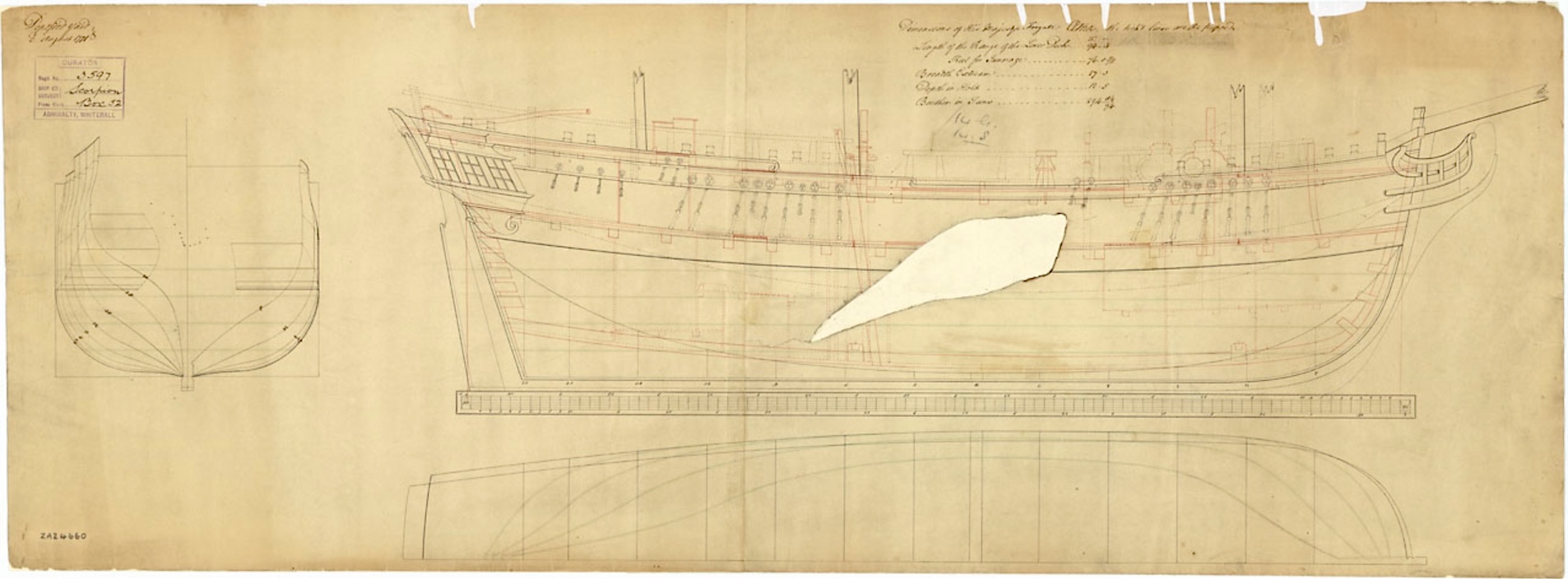
Immediately after receiving the king’s permission to pursue harsher methods of law enforcement, the Lords Commissioners of the Admiralty ordered a number of small warships—frigates, sloops-of-war, and cutters—to be put in commission and readied for service among the colonies in North America. Considering that Governor William Campbell was already destined for South Carolina, and considering his previous years of service in the Royal Navy, the Board of Admiralty, on 16 February 1775, assigned Lord William to command the sloop-of-war Scorpion across the Atlantic to Charleston.[7] Twenty-year-old John Laurens, then a law student in London, wrote to his father, Henry, two days later, reporting that Campbell informed him the Scorpion would “sail in two or three weeks” for South Carolina, and that the governor’s brother-in-law, Ralph Izard Jr. and his new wife, Elizabeth, would probably accompany him as passengers.[8] In advance of his departure, Lord William also dispatched his personal secretary, Alexander Innes, a savvy Scotsman with military experience, to sail for Charleston immediately and gather local intelligence for both the governor and the British ministry.[9]
Captain Campbell’s estimated departure timeline proved overly optimistic, as he had yet to lay eyes on the assigned vessel. The four-year-old Scorpion patrolled the coast of Scotland during the latter months of 1774 and was recalled southward in late January 1775. After mooring the ship at Portsmouth Dockyard in late February, its senior officers transferred to other vessels while crewmen commenced a campaign of routine maintenance in preparation for the trans-Atlantic voyage.[10] Campbell traveled overland from London to Portsmouth at the beginning of March to inspect the vessel now under his command. The Scorpion was a ship-rigged (i.e., three-masted) vessel carrying fourteen carriage-mounted cannons, which a civilian of that era might describe as a frigate. Because it carried fewer than twenty guns, however, the Admiralty classified the Scorpion —and other small cruisers, regardless of their sailing rig—as an unrated sloop-of-war. Its main deck measured ninety-four feet from stem to stern, and mounted fourteen small swivel guns along the outer railing to defend against potential boarding parties. Below deck, the captain observed sufficient space to carry a burthen of 295 tons of personnel, munitions, and cargo, rendering the ship slightly larger than most commercial vessels of that era, but much smaller than the Royal Navy’s more formidable ships of the line.[11]
Captain Campbell also greeted his crew at the beginning of March. Second-in-command was twenty-five-year-old Lieutenant John Tollemache, an affluent younger son of the 4th Earl of Dysart and grandson of John Carteret, 2nd Earl Granville, the one of the former Lords Proprietors of Carolina. Next in rank was the senior warrant officer, sailing master George Scott, a veteran mariner responsible for supervising the ship’s movements at sea and in port. All three men began recording daily observations in their personal logbooks, while the purser, Henry Holland Searle, kept written accounts of the ship’s provisions and the number of mouths onboard drawing daily rations. The Scorpion’s assigned complement was one hundred men, twenty-two of whom were marines rather than sailors, ready for offensive combat on land or sea.[12]
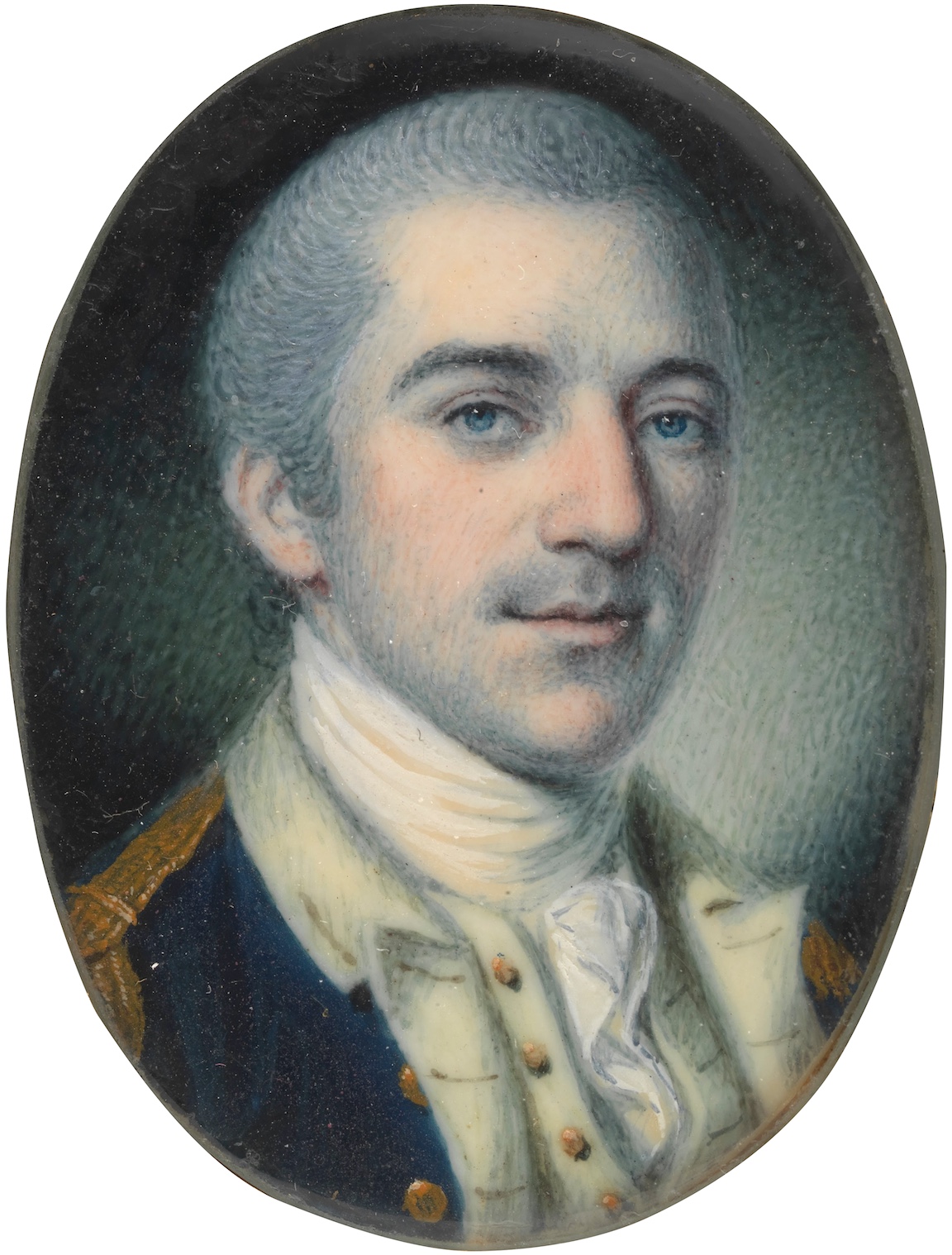
Desiring permission to carry his family and retainers to South Carolina aboard the warship, Captain Campbell returned to London in mid-March to consult with the Lords of the Admiralty.[13] John Laurens visited with Lord William in the metropolis at that time, and, in a letter to his father in Charleston, observed that the governor “seems as far from readiness now, as when his ship was first brought round to Portsmouth.”[14] While Campbell concluded his affairs in London during the latter days of March, carpenters aboard the Scorpion erected temporary partitions to accommodate a number of civilian passengers. Crewmen stowed the last barrels of gunpowder, beer, wine, water, and provisions by the 25th, after which Lieutenant Tollemache and Master Scott conducted the sloop-of-war to an anchorage at Spithead, just outside Portsmouth Harbor.[15]
At that same moment in London, Parliament was refining the text of a new act to severely restrain trade within the unruly provinces of New England. Inter-colony communication, encouraged by the Continental Association of 1774, was fomenting civil disobedience across the Atlantic coastline and undermining British efforts to assert control. The king’s ministers believed that the Southern colonies remained loyal to the Crown at that moment, but they also acknowledged that the rapid decline of political stability cast doubt over the future of Governor Campbell’s administration. As he prepared his family for departure, Campbell’s superiors opined that he might meet a hostile reception at Charleston and perhaps find circumstances inimical to his personal safety. In his hands alone they placed a weighty decision to be made after reaching his destination—whether to abandon the colonial administration of South Carolina, or remain on the ground and struggle to restore obedience to British rule.
That choice was expressed, albeit circuitously, in a rather extraordinary order issued to Campbell with a packet of final instructions from the Lords of Admiralty. On 28 March 1775, the board directed Lord William to proceed with the Scorpion to his government in the capital of South Carolina, where, “upon your arrival, if it should be found necessary for the King’s Service that your Lordship should remain there, you are to give directions to the lieutenant . . . to proceed, without loss of time, to Boston in North America, and, having delivered the inclosed pacquet to Samuel Graves Esqr. Vice Adml. of the Blue & Commander in Chief of His Majesty’s ships & vessels there, he is to put himself under his command & follow his orders for further proceedings.” The unspoken alternative to this conditional plan was perhaps too humiliating to articulate on paper: If, on the other hand, circumstances in Charleston necessitated Campbell’s evacuation, the Admiralty tacitly acknowledged that he might abandon his government and personally sail the Scorpion northward to join the British squadron under Admiral Graves at Boston.[16]

Lady William (that is, Sarah Izard Campbell) joined her husband aboard the Scorpion at Spithead on 5 April 1775, followed by their three young children (William, Ann, and Louisa), Sarah’s younger brother, Ralph Izard Jr., his teenaged bride, Elizabeth, and their various domestic servants, forming a total of twenty-six civilian passengers. Crewmen unmoored the Scorpion from Spithead on the afternoon of April 7th and steered the warship southward, towards the Portuguese Island of Madeira.[17] After a brief stop at that wine-producing colony off the coast of Morocco, Campbell’s warship turned westward and skirted the Tropic of Cancer across the Atlantic toward North America.
After a journey of nearly ten weeks, crewmen aboard the Scorpion sighted land on the afternoon of June 16th, and, later that evening, anchored the ship outside the bar of Charleston Harbor. At sunset, Captain Campbell ordered his men to fire two cannons, the customary signal to summon a local pilot to guide the ship through the treacherous maze of sand bars leading into the harbor. When none appeared by sunrise the next morning, Campbell ordered Master George Scott to bring the ship closer to the shoreline and fire another pair of guns. At 9 a.m., the impatient captain ordered another booming signal and perhaps expressed displeasure that the people of Charleston would ignore a summons from the king’s warship, with the Royal Navy’s distinctive long, swallow-tailed pennant flying atop the mainmast, visible to any spyglass on shore.
At this point, Alexander Innes, Campbell’s personal secretary, might have hired a boat to carry him seven miles from Charleston to the Scorpion outside the bar. Innes had arrived two months earlier and, during that time, witnessed a series of extraordinary events undermining the tenuous foundation of British authority in South Carolina. Charlestonians were in daily expectation of their new governor, Innes might have told Campbell aboard the warship. Swift packet boats carrying mail along more direct routes from England informed local readers that Lord William had sailed from Portsmouth in early April. Shortly after his departure, royal packets serving the principal ports of North America reported that King George had, in early February, approved Parliament’s plan to augment Britain’s military presence in the rebellious colonies, news that provoked swift reactions across the continent. On April 19th, civilian efforts to secure the king’s arms and gunpowder in Massachusetts triggered a pair of lethal skirmishes with British troops at Lexington and Concord. Two days later, on 21 April 1775, under the cover of darkness, rebellious South Carolinians confiscated the king’s arms and gunpowder from local magazines without resistance. Lieutenant Governor William Bull issued a proclamation offering a reward for information about the culprits, but the disaffected community remained silent while those loyal to the Crown held their tongue for fear of reprisal.
News of the bloodshed at Lexington and Concord reached Charleston in early May, inspiring local malcontents to summon members of the new Provincial Congress to the capital on June 1st. Shortly thereafter, leaders of the extra-legal assembly ordered two Irishmen to be tarred and feathered for expressing support for an Act of Parliament that suited their religious persuasion. On June 6th, the Provincial Congress resolved to raise three regiments of its own provincial army, paid for by a profusion of newly-minted paper bills of credit. On June 8th, members of the shadow assembly debated whether or not to order the pilots of Charleston Harbor “not to board or bring in any man of war or [military] transport ship.” Henry Laurens, still President of the Provincial Congress at that time, asked his colleagues, “what is to become of Lord Wm. C[ampbell] & his suite?” Refusing the new governor a pilot to guide his ship into the harbor, said Laurens, “would be ungrateful, inhuman, & answer no other end but that of shewing our ill temper.” The majority of the representatives outvoted President Laurens, however, and ordered the pilots to deny service to any vessel of the Royal Navy. Laurens shrugged off the prohibition at the time, predicting that “his Lordship will certainly find a way into this harbour without the aid of our pilots.”[18]

Alexander Innes might have informed Governor Campbell that the arrival of the Scorpion outside the bar on the evening of June 16th and its booming signals for a pilot had triggered a fresh debate of the matter within the Provincial Congress. Early on the 17th, the majority of delegates, encouraged by President Laurens, relented and voted to permit a pilot to steer the Scorpion through the sandy gauntlet and into Charleston Harbor.[19] After firing several more signal guns that afternoon, Captain Campbell and his fellow officers aboard the warship noted in their logbooks the arrival of an unidentified pilot at 3 p.m. As customary, the ship’s senior officers deferred to the pilot’s local knowledge and followed his directions for the last few miles of their long journey.
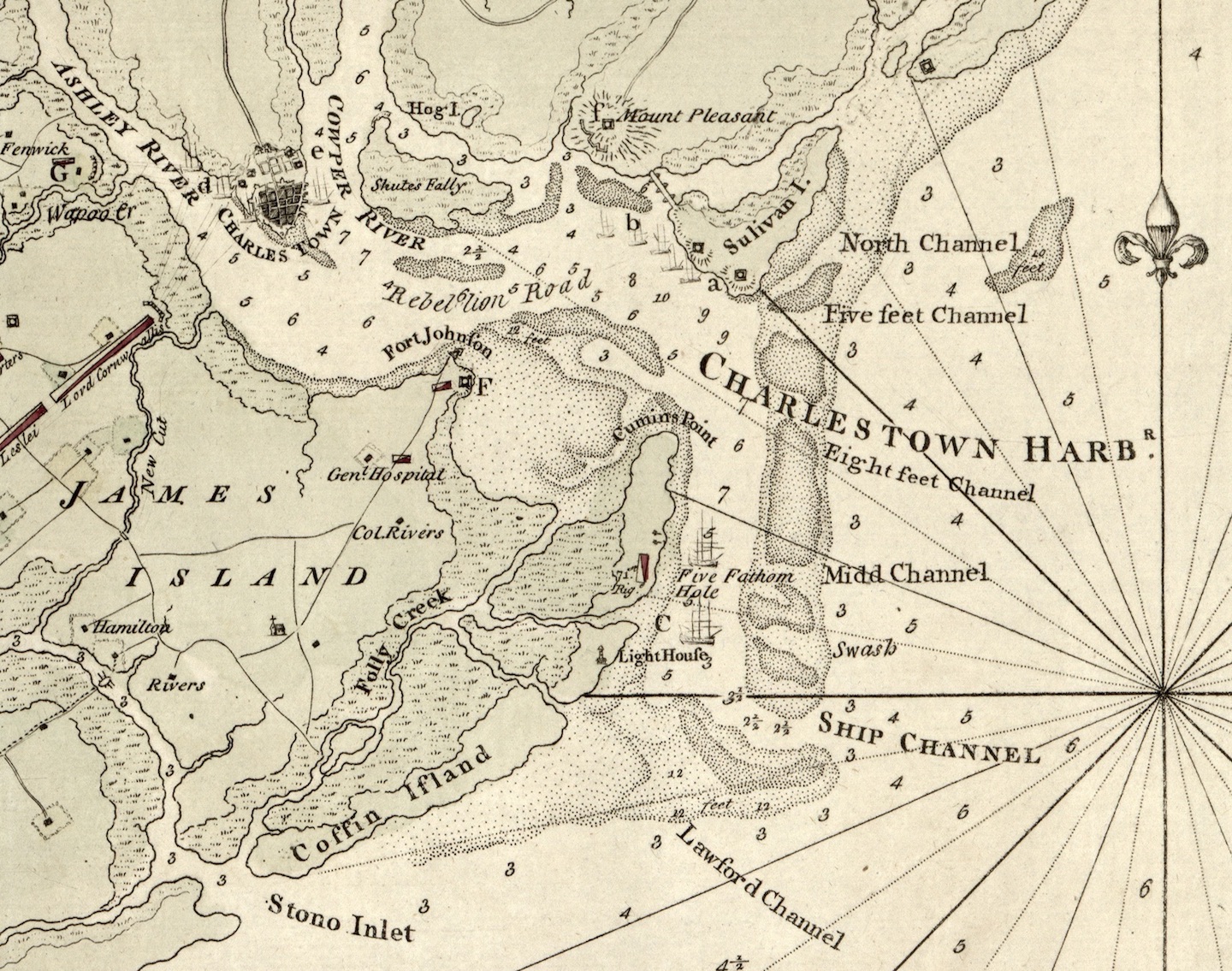
The Scorpion raised its sails at 6 p.m. and followed the flood tide eastward into the ship channel opposite the Charleston Lighthouse, near the southern end of modern Morris Island. Its path then turned northward at Five Fathom Hole, then curved to the east again around Coming’s Point, passing Sullivan’s Island and traversing the broad anchorage of Rebellion Road. At 7 p.m., cannons atop the ramparts of Fort Johnson on James Island fired a seventeen-gun salute to the royal governor, answered by gunners aboard the Scorpion with the same number of guns. The pilot veered his course slightly to the north, into the Cooper River, and passed along the length of Charleston’s commercial waterfront. At half past seven, the warship turned into the wind, luffed its sails, and dropped anchor nearly opposite Craven Bastion (now the site of the U.S. Custom House).[20]
As crewmen scurried about the ship to furl the sails and moor the Scorpion securely in the tidal stream, Governor Campbell and his family prepared to face an uneasy reception from the people of South Carolina. The civilian passengers, weary of shipboard life after months at sea, might have clamored to go ashore immediately, but the setting sun obliged them to delay their formal entrance into the capital to the following day. While drums and fifes in town sounded the customary tattoo and the setting of the Night Watch, the captain retired to his cabin below deck for a night of anxious rest. The following day, as we now know, marked the beginning of the end of British rule in South Carolina. Tune in next time, when we’ll follow Lord and Lady Campbell into rebellious Charleston and bear witness to their struggles to tame the maturing spirit of revolution.
[1] See the brief biography of Ralph Izard Jr. (ca. 1750–ca. 1812) in Walter B. Edgar and N. Louise Bailey, eds., Biographical Directory of the South Carolina House of Representatives, volume 3 (Columbia: University of South Carolina Press, 1981), 373–75. He married Elizabeth Stead, a minor, on 14 March 1774 at the church of St. Marylebone, London; see W. Bruce Bannerman, and R. R. Bruce Bannerman, eds., The Registers Marriages of St. Mary le Bone, Maiddlesex, 1754–1775, part 2 (London: Roworth and Company, 1918), 149.
[2] See Henry Laurens to Louis Gervais, 9 April 1774; to Alexander Garden, 13 April 1774; to Thomas Smith, 21 July 1774; in David R. Chesnutt, et al., eds., The Papers of Henry Laurens, volume 9 (Columbia: University of South Carolina Press, 1982), 398–99; 402, 521–22. The controversial government policy, an “Additional Instruction” forwarded to the colony’s royal governor in 1770, is discussed in See Jack P. Greene, “Bridge to Revolution: The Wilkes Fund Controversy in South Carolina, 1769–1775,” The Journal of Southern History 29 (February 1963): 19–52.
[3] For more information about the political meetings in Charleston during the summer and autumn of 1774, see Christopher Gould, “The South Carolina and Continental Associations: Prelude to Revolution,” South Carolina Historical Magazine 87 (January 1986): 30–48.
[4] National Archives, Kew, Register of Privy Council, 1774–75, PC 2/118, pages 226–27 (19 October 1774); 473–74 (5 April 1775).
[5] South Carolina and American General Gazette, 14–21 October 1774, page 3.
[6] For more information about the Provincial Congress, see William Edwin Hemphill and Wylma Anne Wates, eds., Extracts from the Journals of the Provincial Congresses of South Carolina, 1775–1776 (Columbia: South Carolina Department of Archives, 1960).
[7] The date of Campbell’s appointment appears in the Muster books, Scorpion, 1775–76, ADM 36/8377, at the National Archives, Kew.
[8] John Laurens to Henry Laurens, 18 February 1775, in David R. Chesnutt, et al., eds., The Papers of Henry Laurens, volume 10 (Columbia: University of South Carolina Press, 1985), 78.
[9] For more information in Innes, see B. D. Bargar, “Charles Town Loyalism in 1775: The Secret Reports of Alexander Innes,” South Carolina Historical Magazine 63 (July 1962): 125–36.
[10] The St. James Chronicle; Or, British Evening Post, 28–31 January 1775, page 3; The London Evening Post, 25–28 February 1775 , page 4;
[11] For more information about the Scorpion, see Rif Winfield, British Warships in the Age of Sail, 1714–1792: Design, Construction, Careers and Fates (Seaforth, 2007), page 436 of the e-book edition.
[12] Campbell, Tollemache, and Scott commenced their respective logbooks at the beginning of March 1775; see Captain’s log, Scorpion, 1775, ADM 51/872, and Master’s log, Scorpion, 1775–76, 52/1985, both at the National Archives, Kew; The current condition of Tollemache’s Lieutenant’s log, Scorpion, 1775, ADM/L/S/183, at the Caird Library and Archive, National Maritime Museum, Greenwich, renders it unfit for use. Details of the ship’s crew and complement appear in Muster books, Scorpion, 1775–76, ADM 36/8377, at the National Archive, Kew. Note that the ship's complement included two fictitious "widows' men," a standard accounting practice of that era, whose nominal presence augmented the Royal Navy's pension fund for disabled and elderly seamen. In reality, therefore, the Scorpion carried a total of ninety-eight men.
[13] Lord William Campbell to Admiralty Secretary Philip Stephens, 1 March 1775, ADM 1/1610, National Archives, Kew.
[14] John Laurens to Henry Laurens, 14 March 1775, in Chesnutt, Papers of Henry Laurens, 10: 86.
[15] Information about the movements of the Scorpion during the spring and summer of 1775 in this essay are derived from the aforementioned logbooks of Captain Campbell and Master Scott.
[16] The Board of Admiralty issued copies of this order, dated 28 March 1775, to both Captain Campbell and Admiral Graves; see Admiralty Orders, 1771–75, ADM 2/99, pages 305–6. In this quotation and others throughout this essay, I have reproduced the spelling found in the original source.
[17] Admiralty orders to Lord William Campbell, 3 April 1775, in ADM 2/99, page 309; Muster books, Scorpion, 1775–76, ADM 36/8377.
[18] Henry Laurens to John Laurens, 8 June 1775, in Chesnutt, Papers of Henry Laurens, 10: 164–66.
[19] Henry Laurens to John Laurens, 18 June 1775, in Chesnutt, Papers of Henry Laurens, 10: 183–85. The logbooks of the captain, lieutenant, and master of the Scorpion all mention the presence of a pilot on 17–18 June 1775, but neither the ship’s paybook nor muster books include his name.
[20] Details of the ships progression into Charleston appear in the aforementioned logbooks of Captain Campbell and Master Scott.
NEXT: The First Days of South Carolina's Last Royal Governor
PREVIOUSLY: Lord William Campbell, Sarah Izard, and their Carolina Connection, Part 2
See more from Charleston Time Machine