
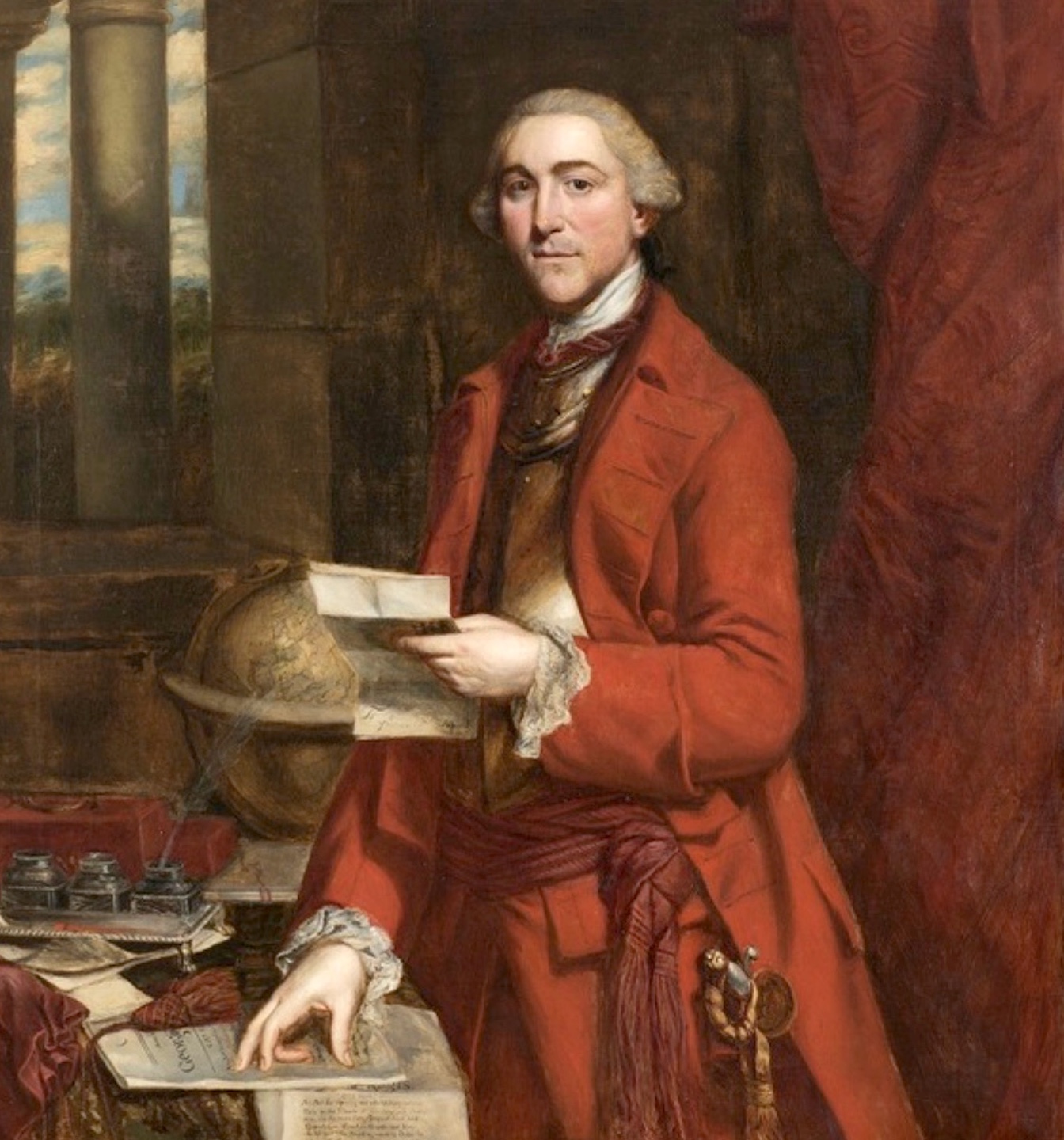
The newlyweds, Lord and Lady William Campbell, settled in England after their 1763 marriage in Charleston, but the young couple actively nurtured familial connections to South Carolina over the course of the ensuing decade. Political, financial, and naval alliances made during the 1760s, followed by a tour of the colonies and a relaxing sojourn in Charleston in 1772, fortified their bonds to His Majesty’s most profitable colony in North America.
Soon after Captain Campbell separated from the warship Nightingale at Woolwich Dockyard, on the south bank of the River Thames, in late July 1763, he probably took his Carolina bride nearly five hundred miles north of London to the town of Inveraray, County Argyll, in the west of Scotland. There they undoubtedly lodged with the groom’s father, John Campbell, 4th Duke of Argyll, within Inveraray Castle, the ancestral home of the chiefs of Clan Campbell. Lord and Lady William evidently made a favorable impression on the local gentry during their winter holiday, when one of the Members of Parliament for Argyllshire resigned his seat to accept another office. In a by-election held in January 1764, the constituents unanimously elected the duke’s youngest son to represent the county in London.[1] Lord and Lady William returned to the capital shortly thereafter and took up residence in Dean Street, within the fashionable neighborhood of Soho.[2]
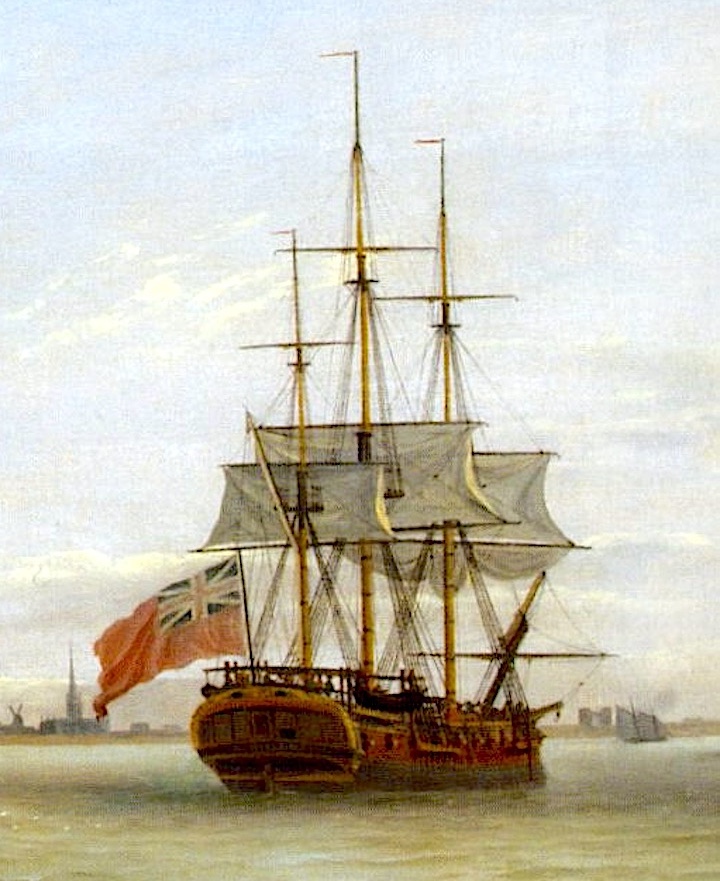
Captain Campbell’s foray into politics in the spring of 1764 altered the course of his career, but it did not diminish his standing as an officer in the Royal Navy. That March, the Board of Admiralty commissioned him to command the sixty-gun warship Achilles, then anchored within Portsmouth Harbor on the southern coast of England. The ship was already in commission and fully manned, serving as one of several stationary guardships during a time of peace with European neighbors. Although the four-hundred-odd crewmen aboard the Achilles stood ready for action on short notice, the guardship’s passive role allowed its commanding officer to come and go with relative freedom. Captain Campbell thus represented Argyllshire during the periodic sessions of Parliament in London, then travelled occasionally nearly a hundred miles southward to visit the Achilles in Portsmouth Harbor. The Admiralty extended Lord William’s alternating service in May 1765 by transferring him to the command of a larger guardship at Portsmouth, the seventy-four gun Bellona, named for the ancient Roman goddess of war.[3]
Besides attending Parliamentary debates at Westminster and sporting his naval uniform at Portsmouth, Campbell’s professional duties allowed him some measure of leisure time. In July 1765, for example, Lord and Lady William were spending a quiet afternoon fishing on the banks of the River Thames near the town of Henley, thirty-odd miles west of central London, in company with Campbell’s older sister, Lady Caroline Conway. In the distance, they heard a voice in distress calling out for a boat, several of which passed by the scene “without taking the least notice” of the cries. Soon after, “a man appeared at the point of an island [in the river], and called out, that there was man drowning.” Captain Campbell, accompanied by his wife and sister, then sprang into action and earned a paragraph in the local news:
“Lord William Campbell and the ladies immediately set out [in a punt or boat], and came to the place [in the river], where they were shewn [sic] something like a man lying at the bottom of the water. His Lordship stirred the body with the pole of his boat, which was 20 feet long; but as the pole had no hook to it, and his Lordship finding it was losing too much time, he instantly pulled off his coat (his lady and sisters being in the boat) and jumped into the water, which was 16 feet deep, and, although the man was under the trunk of an old tree, he brought him up, and swam to shore with him. His Lordship then ordered him to be blooded [that is, the contemporary medical practice of blood-letting], and by his great care of him, he soon began to draw breath, and being carried home, is since perfectly recovered.”
Details of Campbell’s life-saving act appeared in the most fashionable newspapers of both London and Edinburgh and were repeated by several provincial papers across Britain. The extent to which the story influenced his later career is unknown, but its closing line provided a fitting summary of his public reputation at that moment: “Lord Campbell is a young gentleman most deservedly esteemed, and is a most gallant and humane sea-officer.”[4]

At some point before the conclusion of the year 1765, Sarah Izard Campbell gave birth to her first child, a son she and his Lordship christened William Conway Campbell. The child’s middle name honored Lord William’s brother-in-law, Henry Seymour Conway, who had married the captain’s older sister, Caroline, nearly twenty years earlier. General Conway was, at that moment, a senior officer in the British Army and a veteran Member of Parliament. In May 1765, he became Secretary of State for the Southern Department, a ministerial post with administrative jurisdiction over Britain’s American colonies. Conway’s position in government undoubtedly aided Campbell’s rise in political rank, and, in at least one instance, influenced Lord Williams’ perception of American civil rights.
Henry Conway’s appointment to a government cabinet position in 1765 occurred two months after Parliament had ratified “An Act for granting and applying certain stamp duties, and other duties in the British colonies and plantations in America towards further defraying the expenses of defending, protecting, and securing the same,” commonly called the Stamp Act of 1765. That infamous piece of legislation proved extremely unpopular in the North American colonies, where loud complaints about taxation without representation kindled the sparks of a political movement that eventually exploded into a war for independence. As the new Secretary of State for the Southern Department, Conway harangued his colleagues in Parliament to respect the voices of their colonial brethren and repeal the divisive Stamp Act. His leading role in the endeavor garnered praise from political allies near and far, including Conway’s own brother-in-law. Lord William Campbell reportedly broke political ranks with his conservative father and older brothers over this matter and voted with the majority of Parliament in the spring of 1766 to repeal the Stamp Act. In contrast to his later reputation as the stubborn royal governor of rebellious South Carolina, therefore, Campbell was not totally unsympathetic to the voices of colonial dissent.[5]
Captain Campbell’s uneventful naval service at Portsmouth and his brief career in Parliament both ended in mid-July 1766, shortly after Londoners learned that the Governor of His Majesty’s Canadian Province of Nova Scotia had died six weeks earlier. One prominent newspaper in the metropolis reported that government was, at that moment, considering eleven different candidates for his replacement. Through his affiliations with Secretary of State Conway and the influential Duke of Argyll, Lord William Campbell quickly emerged as the successful nominee. In mid-July, he resigned his command aboard the guardship Bellona and vacated his seat in the House of Commons. After King George III approved a draft of his royal instructions in late July, Lord William discussed colonial policy with various government officials and took the preliminary oaths of office in early September.[6] Lord and Lady William, accompanied by their son, William, and infant daughter, Louisa, set out from London in early October and traveled by carriage to Portsmouth. There they boarded His Majesty’s Ship Glasgow, a twenty-gun frigate, which landed them at Halifax in late November 1766.[7]
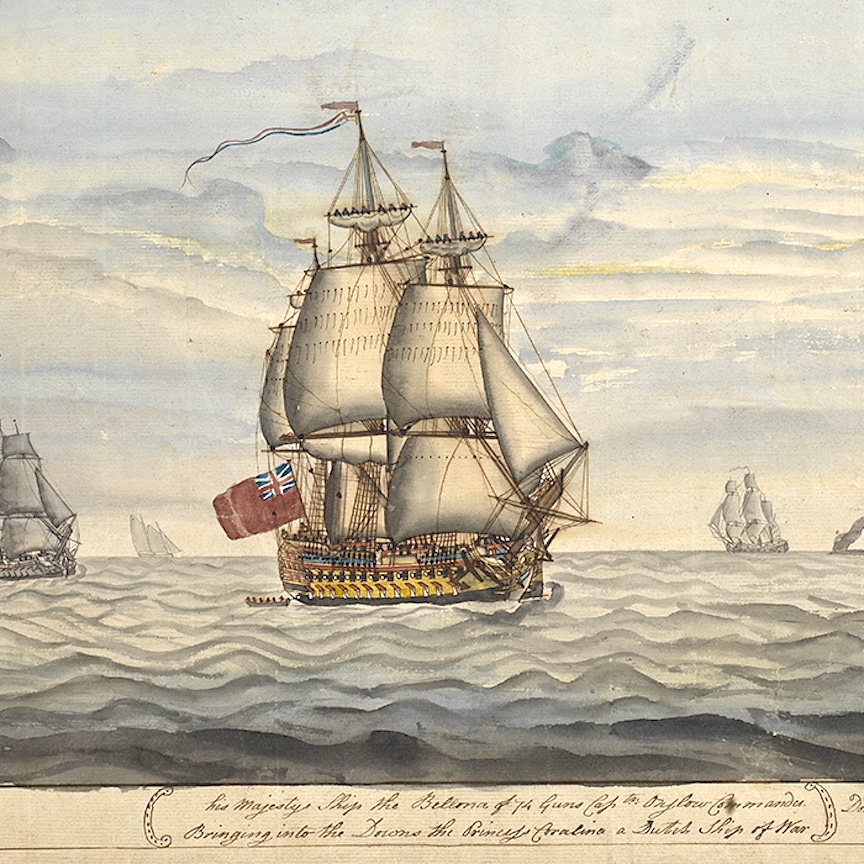
During his first year in office as Governor of Nova Scotia, Campbell requested and obtained permission from his superiors to return to London for conversations about political and economic conditions in the colony. Lord and Lady William, accompanied by their children and several provincial officials, again boarded the warship Glasgow in Halifax Harbor in late September 1767 and sailed six hundred nautical miles southward to New York. After a brief respite in the metropolis—then the second largest city in North America, after Philadelphia—the entourage transferred to the merchant ship Edward, which delivered them to London in mid-November. The family again lodged at the Campbell house in Dean Street, Soho, while the governor reported to and consulted with Britain’s principal Secretaries of State and the venerable Board of Trade and Plantations.[8]
Lord and Lady William were present in London in April 1768, when Sarah’s younger sister, Rebecca Izard, married Collin Campbell (his spelling), a distant cousin to the governor. As Lord William had done in Charleston in 1763, Collin Campbell signed a lengthy marriage settlement with Rebecca’s male guardians immediately before the wedding. The contract established a similar trust responsible for managing Rebecca’s interest in plantation property in South Carolina, for which her uncle Daniel Blake, Lord William, and the 4th Duke of Argyll, served as managing trustees. While other men managed Lord William’s share of Izard property in the colony (including scores of enslaved people), his Lordship exercised limited control over Collin Campbell’s marital interest in the same property.[9]
Governor Campbell and his colonial colleagues returned to Nova Scotia aboard the warship Mermaid in the late summer of 1768, while Sarah Izard Campbell sailed from London later in the same year aboard the merchant ship Little Carpenter, accompanied by her two children, her sister, Rebecca, and her new husband. The affluent entourage and their domestic servants arrived in Charleston in late January 1769 and spent a number of months visiting with family and friends.[10] At some point after the return of the Izard sisters to South Carolina, their former guardians—Henry Middleton, Daniel Blake, and Benjamin Smith—made a formal division of the estate of their late father, Ralph Izard. The family fortune, according to an inventory made in the spring of 1761, included a townhouse in the capital, generous quantities of fine furniture and luxurious accessories, seven large rural plantations, and more than 340 enslaved people of African descent, whose labor generated the Izards’ wealth.[11] All of this property was appraised and partitioned into four roughly equally shares divided between Sarah, Rebecca, and their two younger brothers, Ralph Jr. and Walter. Having reached their majority age, the two sons thereafter gained control of their respective properties, while the trustees nominated by the marriage settlements of Sarah and Rebecca continued to manage their portions.
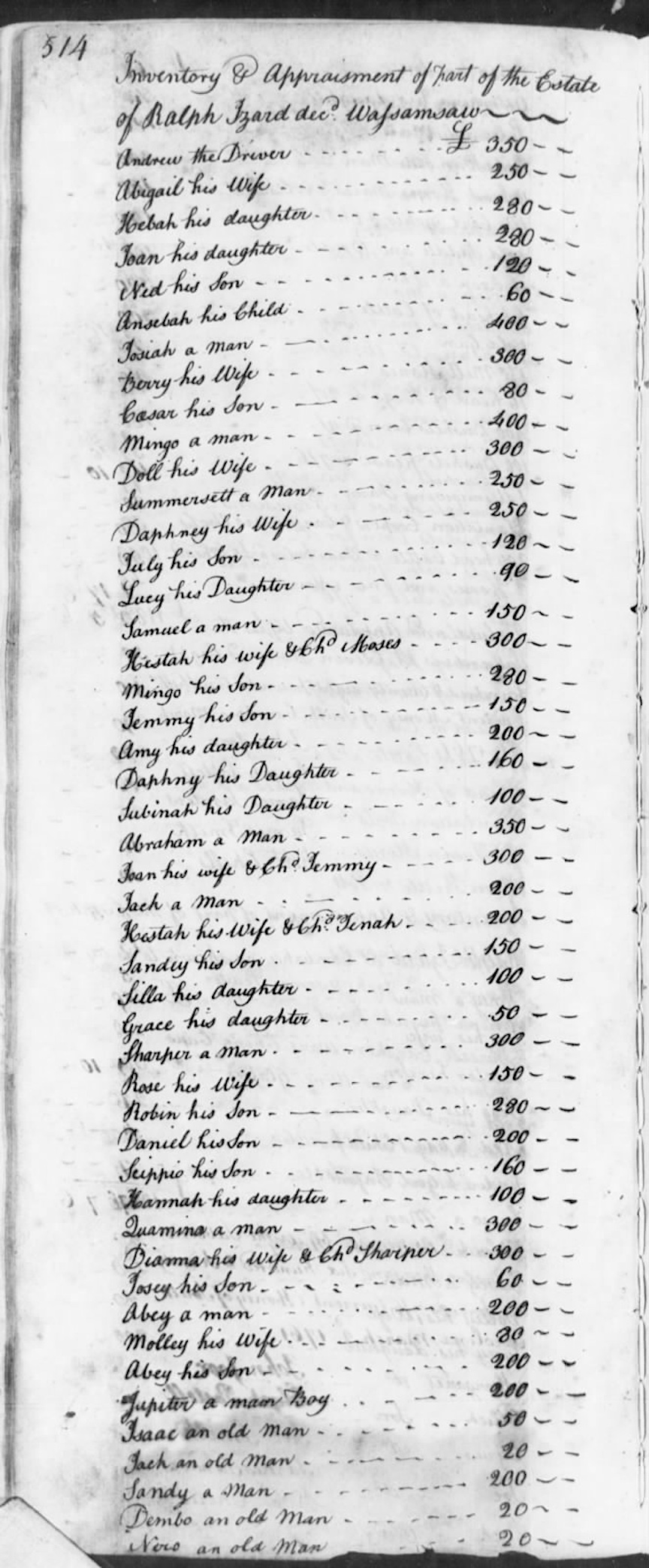
According to their father’s will, both women shared ownership of a large rice plantation at a place called Wassamasaw, a swampy landscape within the boundaries of modern Berkeley County. Sarah, as eldest daughter, received a larger number of enslaved people than Rebecca, however, and her trustees judged them too numerous for Sarah’s half-share of the Wassamasaw property. While Lady William and her children sailed to Halifax to join Governor Campbell in Nova Scotia, her trustees in South Carolina reached across the Atlantic to negotiate the purchase of additional acreage from an absentee landowner. In January 1770, Henry Middleton, Daniel Blake, and Benjamin Smith used part of Sarah’s inheritance to purchase a high-value plantation containing 811 acres along the northern banks of the Savannah River in St. Peter’s Parish, now part of Jasper County.[12] A later description of the site described it as being “nearly opposite the City of Savannah,” the colonial capital of Georgia. Governor Campbell’s prenuptial contract precluded his direct involvement with the management of this property, but he was evidently responsible for naming the plantation “Inverary” (sic), after his family seat in the County of Argyll.[13]
Meanwhile, back in Halifax, Lord William again requested and obtained official permission to take a recuperative holiday from his administration of Nova Scotia. The hiatus was ostensibly for the benefit of the governor’s health, but family and property interests in South Carolina formed a powerful attraction. Accompanied by his wife and children, Campbell boarded the warship Gibraltar in mid-October 1771 and sailed southward from Halifax to Boston. In the capital of Massachusetts, the couple hired or purchased horses and equipage to carry them along a meandering southward journey traversing most of the king’s North Atlantic colonies. Besides stopping a various wayside inns along the unpaved route, the Campbell family rested briefly in New York City, Philadelphia, Williamsburg, Virginia, and Wilmington, North Carolina, before reaching the gates of Charleston on 26 February 1772.[14] The location of their temporary residence within South Carolina’s colonial capital is unknown, but they might have lodged with some members of the Izard family, or perhaps Sarah’s first cousin, Mary Izard Brewton, wife of wealthy merchant and planter Miles Brewton.
On March 12th, two weeks after arriving at Charleston, Lord William again set out over land to the southward. The local newspaper reported that the Governor of Nova Scotia was bound for Georgia, accompanied an unidentified entourage, but details of their itinerary are now lost. Their mission was likely not of a political nature, considering that the Governor of Georgia, James Wright, was then abroad in England. Instead, Campbell likely visited his wife’s recently-acquired plantation, "Inverary," traveling nearly a hundred miles to the southwest along a swampy coastal plain cut by numerous rivers and creeks. Perhaps he sought to witness the beginning of the rice planting season and inspect both the terrain and its enslaved workforce. Whatever his objective, Lord William and his entourage turned northward as spring temperatures increased and returned to Charleston on March 28th.[15]
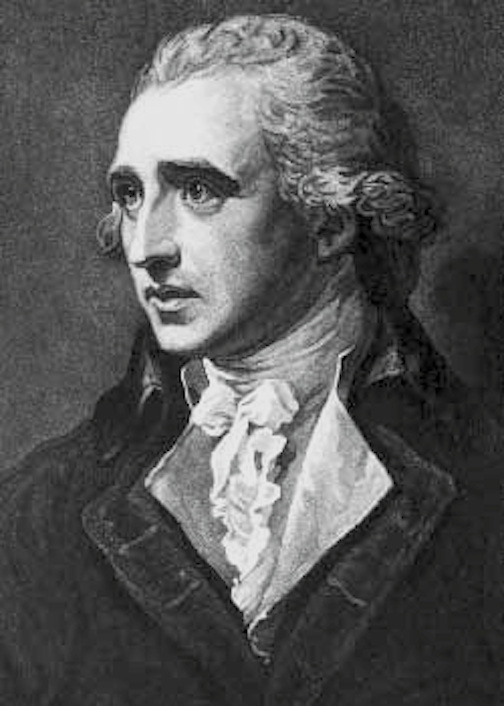
Coincidentally, South Carolina’s young governor, Lord Charles Greville Montagu (1741–1784), arrived in the capital two days after Campbell, returning from a similar but unrelated excursion to Georgia. Montagu, like Lord William, was the younger son of a British nobleman, the 3rd Duke of Manchester, and owed his 1766 appointment as colonial executive to the power of family influence in London. Although well-received by the local gentry at his arrival in June 1766, his popularity in Charleston had declined over the years, as members of the provincial assembly grew tired of Montagu’s affable but politically incompetent demeanor. Lord Charles and Lord William had probably met at social functions in London years earlier, and likely discussed politics while socializing with the wealthy white elite of His Majesty’s most profitable colony in North America.
Governor Campbell left no record of his activities in Charleston during the remaining days of April and May 1772, but he and Sarah likely enjoyed a succession of dinner parties, dancing assemblies, and musical soirées. The town’s St. Cecilia Society, the first subscription concert organization on the continent, was then nearing the zenith of their pre-war prowess, performing vocal and instrumental music drawn from the most fashionable venues of contemporary London. Lord and Lady William’s activities in Charleston likely inspired fond memories of their whirlwind romance nine years earlier and their first seasons together in England. The onset of summer weather soon dispelled the social season, however, and the Campbell family prepared for departure. After hiring passage aboard a commercial schooner in late May, they sailed northward from Charleston to Boston and reached Halifax that July.[16]
Governor Campbell’s largely congenial relationship with Nova Scotia’s provincial government was not devoid of tension, but it proved more successful than the discordant political scene in South Carolina. After several years of increasing frustration with the colony’s stubborn elected assembly, interrupted by periodic absences abroad, Governor Montagu dissolved the legislature, packed his young family aboard His Majesty’s packet-boat Eagle, bound for London, and formally resigned his post in the spring of 1773. Campbell’s friends and family in government, including his older brother, John, 5th Duke of Argyll, and perhaps Lord Charles Greville Montague himself, lobbied for his appointment to the colony in which Lord William already had family and owned substantial property. Weeks later, on June 5th, King George III appointed Lord William Campbell to fill the recently vacated Governorship of South Carolina.[17]

Back in Nova Scotia, Campbell received news of his new commission before the end of summer. The work of settling his affairs and excusing himself from government duties in Halifax continued into the early weeks of autumn. Immediately before his departure in late October 1773, members of the Nova Scotia General Assembly presented Governor Campbell with a polite address, thanking him for his service. Lord and Lady William, joined by their two children, then boarded the commercial brigantine Adamant and sailed directly across the North Atlantic, landing at Portsmouth late November.[18] Meanwhile, a commercial sloop from Halifax sailed into Charleston Harbor in early December, carrying “a number of horses” and a large “part of the baggage” belonging to Lord and Lady William Campbell, who were expected to follow in the coming months.[19]
The affluent young couple celebrated their eleventh wedding anniversary in London in the spring of 1774, and might have expressed excitement about returning to Charleston after a period of rest and perhaps a trek northward to Inveraray. Their path back to the colonies was soon interrupted, however, by a series of events presaging the collapse of British authority in North America. That narrative forms the beginning of a new chapter in South Carolina history, which we’ll continue in the next episode. Join me then for as we follow the dramatic chain of events forming the tenacious last stand of both Governor Campbell and Britain’s Royal Navy’s in the waters of Charleston Harbor.
[1] See the entry for Lord William Campbell in Lewis Namier and John Brooke, eds. The History of Parliament: The House of Commons 1754–1790 (New York: Oxford University Press for the History of Parliament Trust, 1964); available online at https://www.historyofparliamentonline.org/volume/1754-1790/member/campbell-william-1732-78.
[2] Lord William Campbell was assessed various rates (i.e., taxes) for a residence on Dean Street, Soho, during the years 1765–69, according to the surviving Westminster Rate Books (accessed on Findmypast.com on 4 February 2026). The family probably continued to use this residence into the 1780s, for both Lord and Lady William are buried in the churchyard of St. Anne’s, Soho, the eastern edge of which abuts Dean Street.
[3] Campbell’s commissions for the Achilles, dated 19 March 1764, and Bellona, dated 17 May 1765, appear in ADM 6/20, folios 16 and 75, respectively.
[4] The St. James’s Chronicle; Or, the British Evening Post, 15–17 August 1765, No. 695, page 1. The same text also appears in The London Evening-Post, 15–17 August 1765, No. 5897, page 1; and The Scots Magazine [Edinburg], volume 27 (September 1765): 494.
[5] See the aforementioned biographical essay in The History of Parliament.
[6] London Evening Post, 8–10 July 1766, page 4; London Evening Post, 17–19 July 1766, page 3; Register of Privy Council, 1764–66, PC 2/111, page 729 (30 July 1766); Register of Privy Council, 1766–68, PC 2/112, page 39 (10 September 1766).
[7] The Public Advertiser [London], 4 October 1766, page 2; The Public Advertiser, 15 January 1767, page 2.
[8] New York Gazette, or the Weekly Post-Boy, 15 October 1767, page 3; New York Mercury, 19 October 1767, supplement, page 3; Pennsylvania Chronicle, 19–26 October 1767, page 2; The London Evening Post, 28 November–1 December 1767, page 1; The Public Advertiser [London], 11 December 1767, page 2.
[9] See “Articles of Agreement, tripartite indented,” executed on 22 April 1768, “between Collin [sic] Campbell of Berners Street in the parish of Saint Mary le bone [sic] in the County of Middlesex, Esquire, of the first part, Rebecca Izard spinster younger daughter of Ralph Izard late of the Province of South Carolina Esquire deceased of the second part, and his Grace John [4th] Duke of Argyle [sic], the honorable William Campbell Esquire[,] commonly called Lord William Campbell[,] youngest son of the said Duke of Argyle [sic], and Daniel Blake of South Carolina Esquire[,] of the third part,” which was recorded in South Carolina on 4 April 1783 in South Carolina Department of Archives and History (hereafter SCDAH), Miscellaneous Records (Main Series), volume TT, pages 241–44.
[10] South Carolina Gazette and Country Journal (hereafter SCGCJ), 11 October 1768, page 2; South Carolina Gazette (hereafter SCG), 26 January 1769, page 2.
[11] No extant copy of the 1769 partition of the estate of Ralph Izard has yet been found, but references to it survive in the text of the 1770 purchase of "Inverary" plantation (see below). For details of Ralph Izard’s property at the time of his death, see his 1761 inventory in SCDAH, Inventories of Estates (series S213032), volume T (1758–1761), pages 507–22.
[12] Basil Cowper, merchant, formerly of Savannah, Georgia, but now of London, and Mary, his wife, to Henry Middleton, Daniel Blake, and Benjamin Smith, of Charleston, trustees appointed for Lord and Lady William Campbell, lease, release, and bond, 30–31 January 1770, Charleston County Register of Deeds, volume R3: 1–23. A verbatim duplicate of this 1770 conveyance and bond is also found in SCDAH, Miscellaneous Records (Main Series), volume OO (1767–1771), pages 399–408.
[13] See the advertisement for the sale of William Conway Campbell's share of "Inverary" plantation in Charleston Courier, 17 September 1822, page 3. Langdon Cheves purchased some or all of this plantation and combined it with other land to form Delta Plantation. See “Langdon Cheves Papers, 1777–1864,” at the South Carolina Historical Society, especially “Correspondence regarding the purchase of a plantation along the Savannah River, 1822,” digitized in the Lowcountry Digital Library, https://lcdl.library.cofc.edu/lcdl/catalog/289967; accessed on 26 January 2026.
[14] See Massachusetts Spy, 31 October 1771, page 3; New York Journal, 28 November 1771, page 3; Pennsylvania Packet, 16 December 1771, page 3; Virginia Gazette, 2 January 1772, page 3; Boston News-Letter, 27 February 1772, page 1; South Carolina and American General Gazette (hereafter SCAGG), 25 February–2 March 1772, page 2.
[15] SCAGG, 9–16 March 1772, page 6; SCG, 26 March 1772, page 1; SCAGG, 23–30 March 1772, page 3.
[16] SCG, 28 May 1772, page 2; SCG, 4 June 1772, page 2.
[17] The London Gazette, 1–5 June 1773, No. 11358, page 1.
[18] SCAAG, 17–24 December 1773, page 1; The Hampshire Chronicle: Or, Winchester, Southampton, and Portsmouth Mercury, 29 November 1773, page 3.
[19] SCG, 13 December 1773, page 3; SCGCJ, 14 December 1773, page 2.
NEXT: Governor William Campbell and the Scorpion, sailing to Charleston in 1775
PREVIOUSLY: Lord William Campbell, Sarah Izard, and their Carolina Connection, Part 1
See more from Charleston Time Machine