
After months of increasingly hostile rhetoric between rebel leaders in the colonial capital of South Carolina and British officers marooned in Charleston Harbor, the exchange of threats concerning the flow of provisions to the king’s warships and their dependents provoked a rebel operation in November 1775 to prevent their navigation towards the town, triggering a relatively minor skirmish with significant implications for the colony’s future.
As I mentioned in the previous episode, His Majesty’s warships Tamar and Cherokee remained at anchor off the southwest end of Sullivan’s Island during the month of October 1775.[1] Both vessels periodically sent crewmen ashore to obtain fresh water and firewood from the king’s island, where a small community of loyalist refugees coalesced around the quarantine hospital known as the Pest House. Their numbers increased on October 17th with the arrival of a white mariner named William Bath, a veteran pilot of Charleston Harbor, who fled the capital and boarded the Tamar “for protection.” Like the Black pilots Harry Stone and Fortune Devall, who had who joined the sloop-of-war in late September, William Bath remained aboard the warship for many months and later participated in the famous naval battle of June 1776.
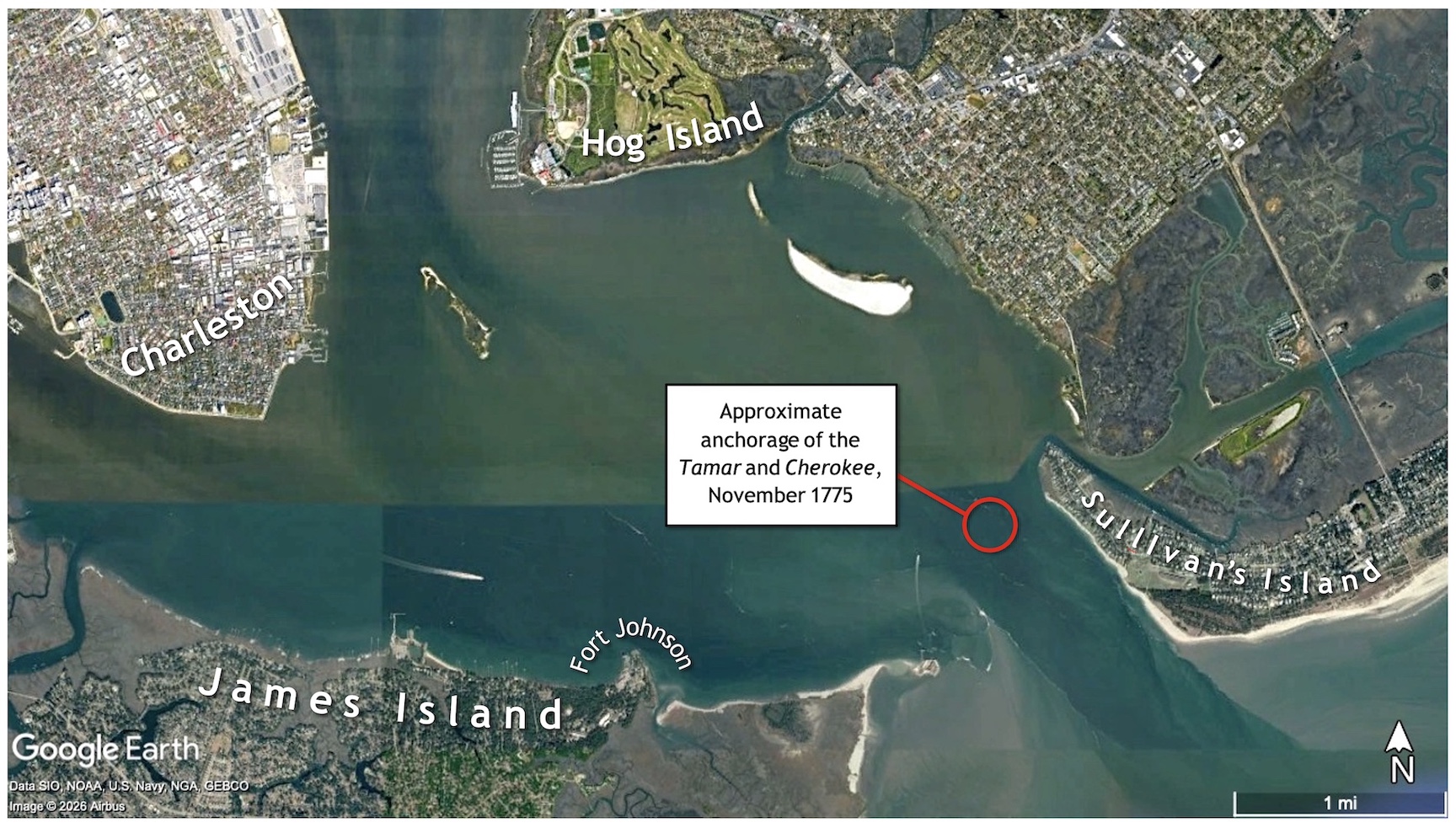
The king’s warships continued to ignore the stream of rebel boats ferrying men and materiel between the waterfront of urban Charleston and Fort Johnson on James Island, but they jealously guarded the easternmost parts of the harbor, adjacent to the bar, including the anchorage called Rebellion Road. When a boat departed from Fort Johnson and turned eastward on the afternoon of October 18th, for example, both the Tamar and Cherokee fired multiple cannons to discourage its progress. Walter Langford, acting sailing master aboard the Tamar, observed that the shots fired at the rebel boat “obliged them to retreat to the fort.”
From his new, more spacious berth aboard the Cherokee, Governor Campbell commenced another long letter to the Earl of Dartmouth on October 19th, reiterating his complaints about the British government’s neglect of the southern colonies in North America. “It is sixteen weeks next Tuesday since Captain Tollemache sailed [the sloop-of-war Scorpion] from this port to Boston and neither General Gage nor the Admiral [Graves] have honoured [me] with the least notice.” Lord William asserted “that three regiments, a proper detachment of artillery, with a couple of good frigates, some small craft, and a bomb-ketch, would do the whole business effectually here” in South Carolina. “Charleston is the fountainhead from whence all the violence flows. Stop that, and the rebellion in this part of the continent will I trust soon be at an end.” Campbell underscored the seriousness of his political situation with a brief personal anecdote. Because the rebel Council of Safety had in late September stopped his wife “from coming down to the king’s ship” to visit him, the governor informed the Secretary of State “I now consider both her and my children as their prisoners.”[2]
Denied assistance from England, the king’s officers in Rebellion Road took measures to augment their own defense. They armed the civilian schooner Polly, seized by the Tamar on September 24th, and deployed it to patrol the customary passages between the ocean and the harbor. In his memoirs, Colonel William Moultrie recalled that the governor’s petite squadron “had a schooner cruising on our bar, and we had information that the men-of-war’s boats used to come up to town every night and get intelligence of our proceedings.”[3] After visiting Fort Johnson on October 19th, Moultrie informed the Council of Safety that this schooner—almost certainly the Polly—had been cruising within the bar of Charleston Harbor by day and sheltering behind Morris Island at night, well-positioned to intercept any incoming vessels.[4]
Although rebel leaders had in early October abandoned the idea of attacking the British warships directly, they proceeded with efforts to create a small provincial navy by outfitting several civilian schooners for combat.[5] The first of these vessels, called the Defence, was ready for action by mid-October, and on October 20th, in response to Colonel Moultrie’s warning, the Council of Safety issued commissions for two additional schooners to purchased and armed.[6] The dearth of maritime traffic to the port frustrated their efforts to recruit seamen, however, because many unemployed sailors had recently enlisted in South Carolina’s nascent provincial army. To solve this conundrum, the Council on October 27th ordered Colonel Moultrie to detach thirty seamen from the provincial infantry regiments to serve aboard the schooner Defence. To curtail the flow of intelligence from Charleston to the king’s ships, the executive Council also ordered the schooner’s commander, Captain Simon Tufts, to anchor the Defence “between Fort Johnson, and the town, to intercept the men-of-war’s boats.”[7]
The stream of intelligence flowing secretly between ship and shore also benefitted the rebel faction in the capital. On October 28th, the Council of Safety dispatched a courier to the Tamar with a letter addressed to Edward Thornbrough, apprising him of a report “that a Negro man named Shadwell, a mariner by profession, the property of John Allen Walter,” was employed on board the Tamar. “The said Negro is a run-away,” wrote the Council, “and as harbouring him is highly penal, and the carrying such a one off the colony, [is a] felony, by the laws of this country, circumstances of which you may not be apprized; we think it necessary to give you this intimation, in order that the Negro may be delivered to his lawful owner.” To avoid insulting the king’s officer with a rude accusation, the Council softened its appeal to Captain Thornbrough with a polite request: “We would not be misunderstood, as insinuating that you, sir, give any encouragement for slaves to leave their masters; we reasonably conclude, that this Negro, if he is on board the Tamer [sic], has imposed himself upon you as a Freeman: Therefore we doubt not, if our information is true, but that you will cause him to be delivered up, to Mr. John Calvert, the bearer of this letter.”[8]
The following morning, Mr. Calvert reported to the Council of Safety “that Capt. Thornbrough appeared angry at the contents” of their letter, and “declared his astonishment and concern, that any gentleman could suspect, that any run-away Negro could be on board his sloop.” Despite the captain’s bluster, the Council’s intelligence might have been accurate. As I mentioned in Episode No. 321, a local mariner named William Shadwell—perhaps the enslaved man in question—was among those impressed by Lieutenant John Fergusson of the Cherokee on September 16th. Nevertheless, Thornbrough assured John Calvert “that no such, or any Negro” was on board the Tamar at that moment, “but one,” whom he exhibited to the messenger and identified as a former crewman aboard the prize schooner Polly. The Black mariner presented to Mr. Calvert on October 28th was either Harry Stone or Fortune Devall, both of whom had become pilots aboard the British warship one month earlier.
Lacking the confidence to make an authoritative response, Thornbrough detained Calvert briefly aboard the Tamar while the captain visited the Cherokee to discuss the Council’s letter with Governor Campbell. Lord William was, by this point, exasperated with the “very old officer” who had “served near 50 years in the Navy.” “Although he is ready to comply with my requests,” Campbell confided to Lord Dartmouth, “he dreads the law, if he apprehends he exceeds, in one point, the strict letter of it, though with people who have trampled on all law and subverted all government.” After Thornbrough returned to the Tamar, he informed Calvert that he would send a formal reply to the Council “when he should have fully considered the letter,” then discharged the messenger back to Charleston.[9]
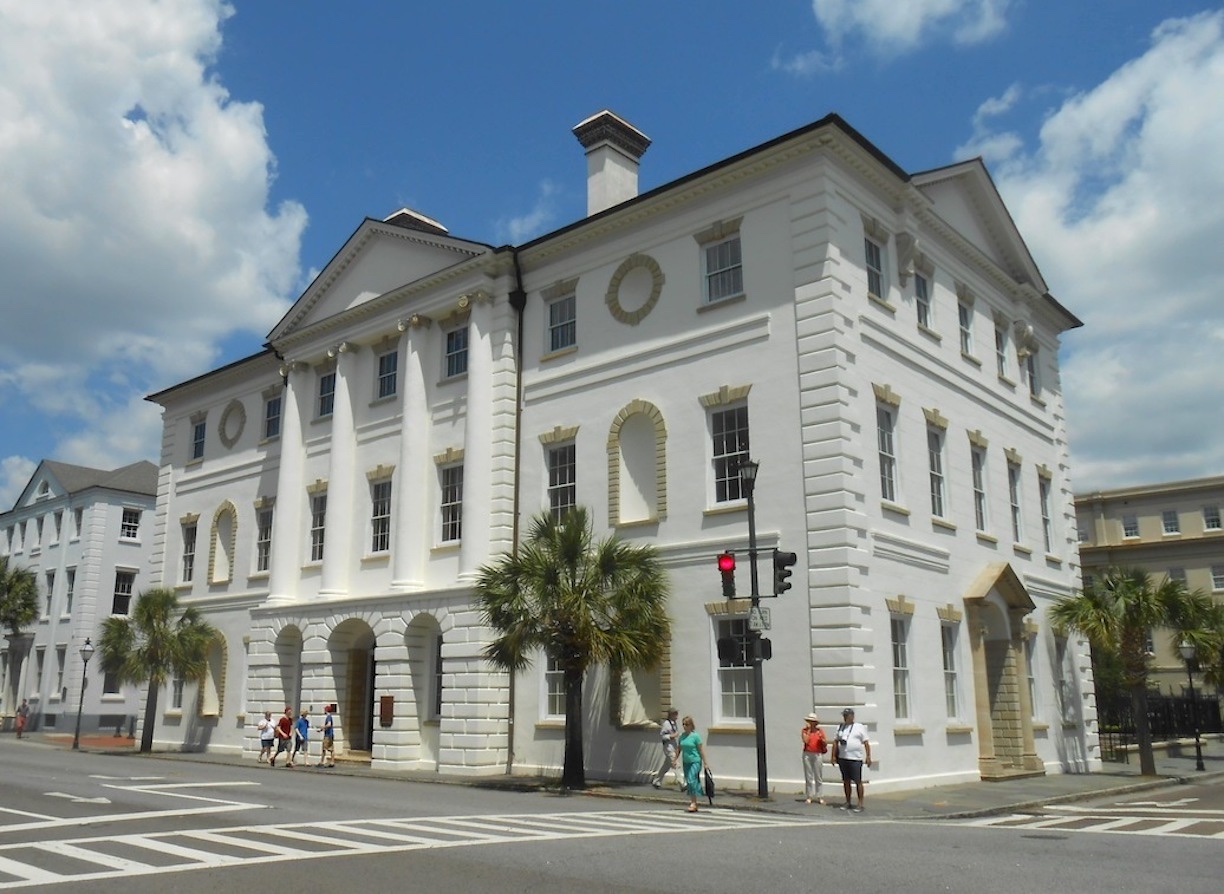
In the meantime, delegates to the South Carolina Provincial Congress reconvened at the State House on November 1st and elected William Henry Drayton, a fervent advocate of the rebellion, as their new president. The following day, former president Henry Laurens conveyed to Drayton a parcel of records, including a letter just received from Edward Thornbrough. The captain’s reply to the Council of Safety, no doubt composed with the advice of Governor Campbell, ignored completely the matter of the enslaved man Shadwell. Instead, he complained vaguely of “the many unprovoked insults” committed against the king’s loyal subjects, and revealed his anxiety about sustaining them, both on board the British warships and on Sullivan’s Island. Thornbrough warned “that if his Majesty’s agents in Charles-Town, are not permitted regularly, and without molestation, to supply the King’s ships Tamer [sic] and Cherokee, under my command, with such provisions as I think necessary to demand, I am determined from this day, not to suffer any vessel to enter into, or depart from Charles-Town, that it is in my power to prevent.”[10]
The Provincial Congress replied to Thornbrough on the evening of November 3rd with a letter signed by President Drayton. Because the British officer had ignored their inquiry about Shadwell, the rebels concluded that Thornbrough’s “unexpected silence on this head, at once is a breach of the rules of propriety, and a negative confession, that the Negro, if not on board the Tamer [sic], is actually harboured on board the Cherokee, the residence of Lord William Campbell, or some other vessel under your command.” In response to the captain’s threat to seize transient vessels, the Congress offered a polite riposte: “It may not be improper that we just hint to you, that we are not destitute of means enabling us to take vengeance for any violence you may think proper to perpetrate against the shipping bound to, or out from this port.”[11]
The exchange of threats between the opposing factions in early November signaled the rising temperature of their smoldering detente, and provoked rebel leaders to augment their budding naval strength. On November 4th, the Provincial Congress resolved to expand the crews of two small vessels first drafted into service in late July. President Drayton issued orders directing Colonel Moultrie “to send a detachment of nine privates and a sergeant on board the pilot-boat, commanded by Capt. Joseph Vesey, and one other detachment of nine privates and a sergeant aboard the pilot-boat commanded by Capt. Thomas Smith, with their necessary arms and accoutrements.”[12]
Later the same day, Thornbrough sent another letter to President Drayton, responding directly to the earlier question regarding the enslaved man Shadwell: “I never directly or indirectly harboured the run-away slave of any person, and I will answer for the gentleman who commands the Cherokee, that his conduct has been exactly similar to mine in these matters.” The captain also reiterated his threat concerning victuals required by the king’s loyal subjects, and hinted at a topic that would soon cause outrage among civilians residing near Sullivan’s Island: “While I command the king’s ships here, I will procure provisions by every means in my power. If the methods I am under a necessity of taking for that purpose, should subject his Majesty’s faithful and loyal people in this province to any inconveniency, I shall be extremely sorry, but they are to impute it entirely to those who have plunged this late happy country into misery and distress, and not to me, who have always protected it to the utmost of my power.”[13]
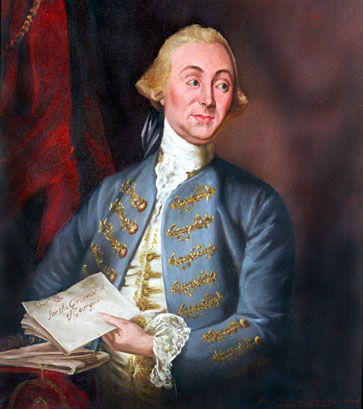
The king’s officers in Rebellion Road were briefly distracted from their Carolina adversaries on the afternoon of November 7th, when a pilot boat from Savannah entered Charleston Harbor carrying George Walker, the former tarred-and-feathered gunner of Fort Johnson, carrying a parcel of unrecorded dispatches from Governor Sir James Wright of Georgia.[14] While Walker commenced his new duties as Master’s Mate aboard the Tamar, the Georgia vessel departed the following afternoon, escorted southward by two armed boats. One of the escorts was a tender belonging to the Cherokee, while the second was a pilot boat called the Shark, probably belonging to pilot William Bath, now residing aboard the Tamar.[15]
Later on the evening of November 8th, Captain Thornbrough and his subordinates detained an incoming schooner called the George Town Packet (Alexander Wyley, master), which they alleged was carrying contraband goods (i.e., French claret), contrary to the king’s orders. This aggressive act, demonstrating Thornbrough’s resolve to execute his threats, provoked rebel retaliation. When the aforementioned escort vessels returned from Savannah near midday on November 9th, the Tamar’s officers watched the two rebel pilot boats, commanded by Captains Vesey and Smith, chase the pilot boat Shark into Charleston Harbor, where it safely rejoined the British warships anchored in Rebellion Road.
Back at the State House that same evening, South Carolina’s rebel delegates engaged in a heated debate of a pivotal change in strategy. Although “many still shuddered at the idea of hostile operations against their former friends and fellow-subjects” of the British Crown, the repeated threats of violence against Charleston, made by Thornbrough and Campbell in recent weeks, finally convinced them that the protection of the capital rendered it “indispensably necessary to lay difficulties in the way of the approach” of the king’s warships.[16] To reduce the possibility of a naval bombardment, the Provincial Congress issued an order to Colonel Moultrie, directing his men on James Island “to endeavor to oppose the passage of any British naval armament that may attempt to pass Fort Johnson.”[17] The memoirs of President Drayton described this brief order as a “prominent step” in the escalation of the revolution in South Carolina, “for it was the first military order, which had been issued, to fire upon the British men of war.”[18] The following day, a courier delivered to Captain Thornbrough a copy of this order, concluding with a genteel note of caution to the king’s officers: “We thus think it proper to warn you from an approach, that must be productive of the shedding of blood, which, in other circumstances, we would endeavour to preserve.”[19]
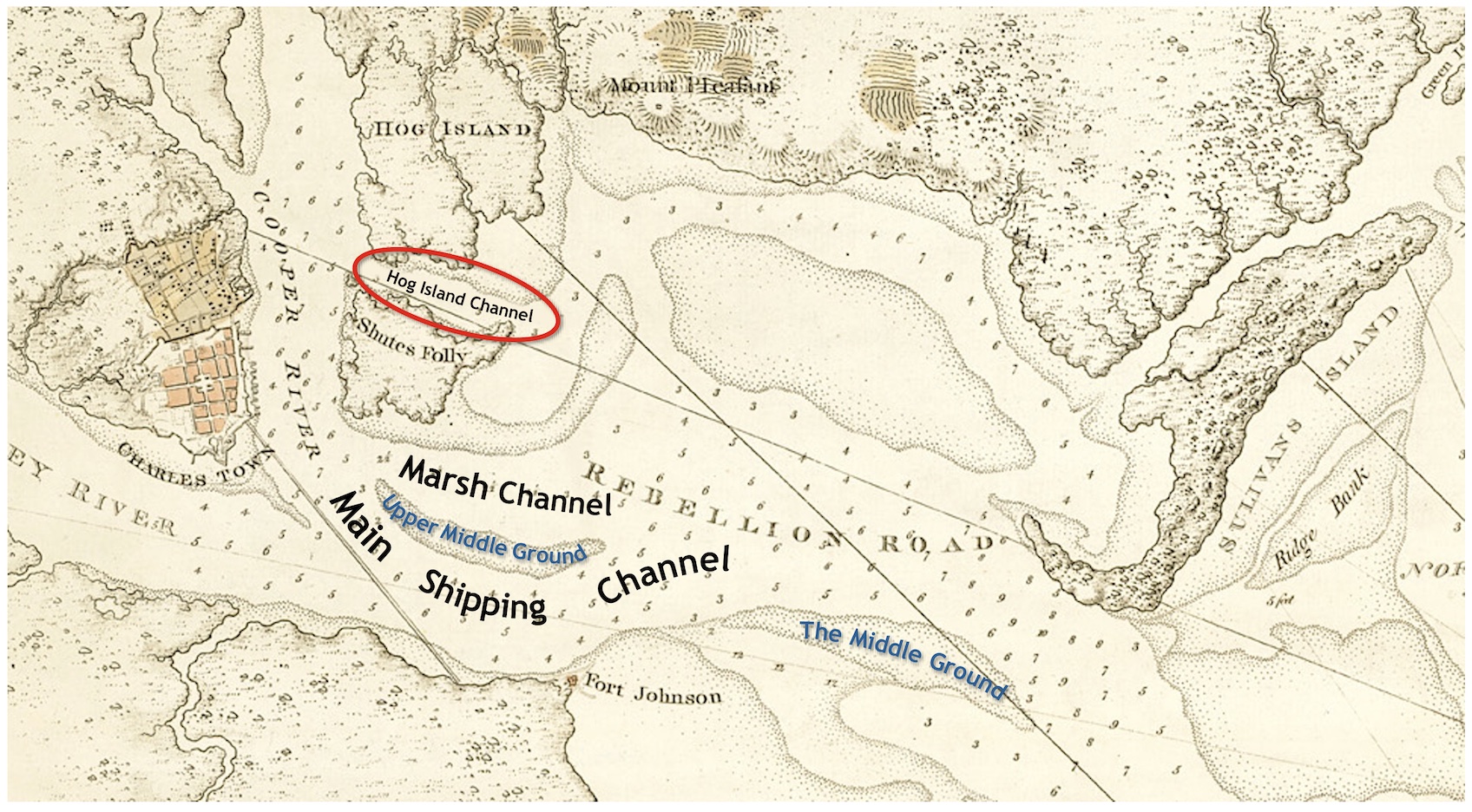
While Thornbrough and Campbell fumed over the rebels’ impudence, the Provincial Congress appointed a committee to consider what further defensive works might be necessary in urban Charleston, “for its most effectual security against hostile attacks by ships of war.”[20] Besides repairs and additions to the town’s fortifications, rebel leaders debated methods of restricting maritime access to the capital. At that time, there were three navigable routes available to vessels traveling westward from Rebellion Road to the Charleston waterfront. The deepest and most commonly-used shipping channel flowed along the northern shore of James Island, within range of the guns of Fort Johnson. A long sand bar or shoal along the northern edge of this shipping route, identified in contemporary maps as the Upper Middle Ground, formed the southern boundary of a shallower waterway known as the Marsh Channel, which flowed along the south side of Shute’s Folly, near the center of the harbor. A third, more circuitous water-path to the capital flowed along the north side of Shute’s Folly, passing through a relatively narrow strait abutting the southern edge of Hog Island, commonly called Hog Island Channel or Creek (both terms were used interchangeably during this period). Because the latter channel could accommodate the passage of relatively small warships like the Tamar and Cherokee, beyond the range of Fort Johnson’s cannons, South Carolina’s provincial government resolved on November 10th to sink several schooners near the eastern entrance of Hog Island Creek to prevent the warships from using that route to approach the town.[21]
Light winds wafted across Charleston Harbor on the clear afternoon of November 11th. At 2 p.m., as the ebbing tide flowed eastward to the sea, the provincial schooner Defence set sail from the capital, equipped with ten or twelve or fourteen cannons (reports vary) and a crew of seventy seamen and marines.[22] They proceeded northward in the Cooper River, followed by a crowd of rowboats towing four hulks (mast-less schooners), each laden with tons of sand. While Captain Tufts commanded the Defence, Captain Edward Blake supervised the scores of oarsmen towing the hulks. William Henry Drayton sailed along as a passenger aboard the Defence, both as a representative of the Council of Safety and as the enthusiastic President of the Provincial Congress, “to see the business done.”
The rebel flotilla soon attracted the attention of the British warships in Rebellion Road, then anchored one mile to the northwest of the Pest House on Sullivan’s Island. Between 3:30 and 4 p.m., the king’s mariners observed a “large schooner” turning eastward from the Cooper River into Hog Island Creek, followed by “a great number of boats” towing four “old hulks.” Another small boat, rowing ahead of the schooner Defence, was sounding the water’s depth near the eastern end of the channel, somewhere between Shute’s Folly and Haddrell’s Point in Mount Pleasant. Captain Thornbrough and his colleagues quickly deduced that the rebels meant to sink the hulks “upon the bar” of Hog Island Creek to restrict their potential movements within the harbor. Although the British warships lay nearly two miles distant, the Tamar at 4:30 p.m. fired a single cannon at the sounding boat to discourage its forward progress. In response, the Defence fired three or four shots at the Tamar, which immediately returned seven or eight shots at the schooner, all of which “fell short on both sides.” Rather than waste further ammunition firing across such a great distance, the opponents silenced their guns.

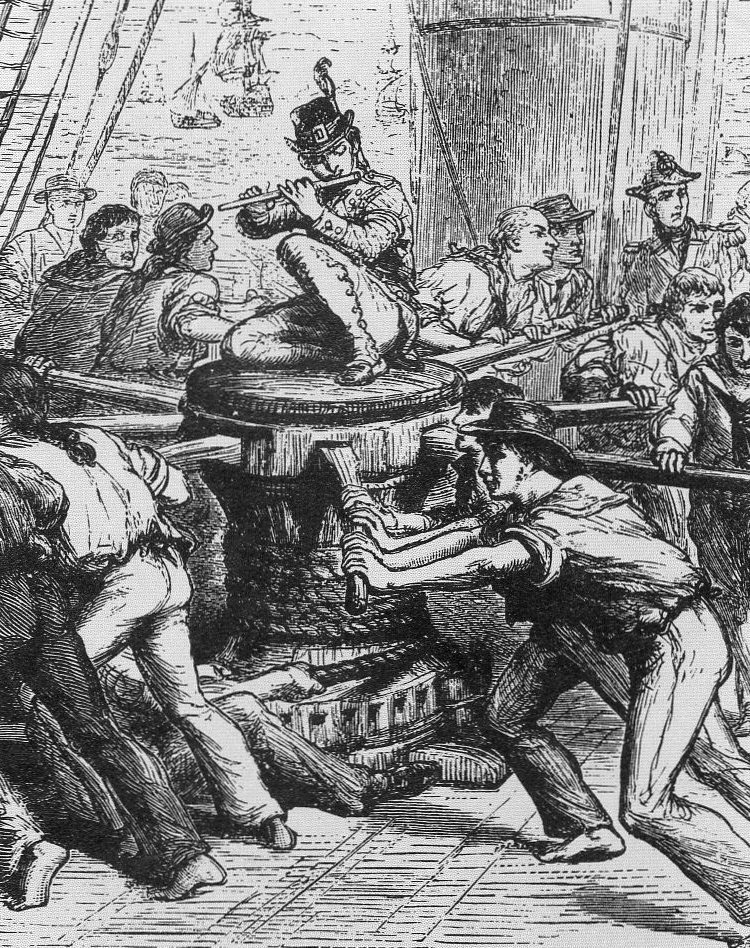
While the British officers conferred to devise a coordinated response, rebel mariners scuttled and sank three hulks in succession across the breadth of Hog Island Creek. The commencement of the flood tide prevented the proper placement of the fourth hulk, however, so Captains Blake and Tufts decided to anchor their vessels in the channel and wait for the next ebb tide, approximately twelve hours later. Their prolonged stasis acted as bait, enticing the king’s warships closer, but the presence of several shifting sandbars in the vicinity induced Captain Thornbrough and Lieutenant Fergusson to proceed with extreme caution. Rather than set sail towards the idle rebels, the Tamar and Cherokee both weighed anchor at 5 p.m. and began warping slowly to the northwest. Crewmen in longboats deposited their respective anchors and cables several hundred feet ahead of their ships’ bows, after which other crewmen turned the ships’ capstans to pull the hulls forward. They repeated this tedious warping process for eleven hours, anchoring at 4 a.m. on November 12th in water just three fathoms (eighteen feet) deep. Captain Thornbrough and Master Langford aboard the Tamar noted that they had “warped the ship as near the reef as we could,” while Lieutenant Fergusson and Master William Pickard aboard the Cherokee recorded their location “on the edge of a shoal that separated the rebel [schooner] from us, about random shot distance.”
Under the cover of darkness, around 4:15 or 4:30 or 5 a.m. (reports vary), the British warships began firing their modest broadsides on the rebel mariners. Some of the iron shot flew past its target into the marsh of Hog Island, but Captain Tufts reported that the schooner Defence received three hits, “one shot under his [stern] counter, one in his broadside, and a third which cut his fore starboard shroud.” The rebel boats immediately towed the Defence some distance to the west, beyond the range of the British guns. Captain Thornbrough and Master Langford noted in their logs that the Tamar ceased firing at the rebels after fifteen minutes, “finding they had towed at a greater distance.” Although Lieutenant Joseph Peyton and his colleagues aboard the Cherokee reported a continuous barrage of cannon fire lasting approximately two hours, Thornbrough and Langford said the two warships “lay until day light and then repeated our fire.” At sunrise, rebel gunners within Fort Johnson fired several cannons at the warships, two miles to the north. All of the British officers observed that the fort’s cannonballs “fell short” of their target, and Lieutenant Peyton added that “only one of which came near us.”
The booming report of cannon fire echoing across the harbor at dawn roused officers of South Carolina’s provincial army in Charleston, who immediately ordered regimental drummers to beat the alarm. While uniformed infantrymen “stood to their arms” at the barracks, ready for action, civilian militiamen shouldered their weapons and reported to their respective alarm posts around the capital. Many of remaining urban denizens, those who had not evacuated during the preceding weeks, rushed to East Bay Street “to witness ‘the fight,’ as they called it,” taking place in the harbor.[23]
Meanwhile, rebel boatmen near Hog Island resumed their mission when the ebb tide commenced around 6 a.m. They towed the remaining sacrificial hulk into position, still under fire from the British guns, and pierced its hull by seven o’clock. As the sand-laden vessel began to sink in the channel, the numerous oarsmen turned to the southwest and rowed back to Charleston. Captain Tufts in the schooner Defence, “having no further duty to perform,” likewise weighed anchor and made sail for the capital. The British warships then ceased their ineffectual firing and focused attention on the lone hulk slowly sinking near Hog Island. At half-past seven, the Cherokee (not the Tamar, as reported in American sources) scrambled armed men into the ship’s boats to tow the half-submerged vessel out of the partially-blocked channel. The retreating schooner Defence fired three parting shots at the king’s boats, but then watched helplessly as British mariners set fire to the intended obstruction.[24]
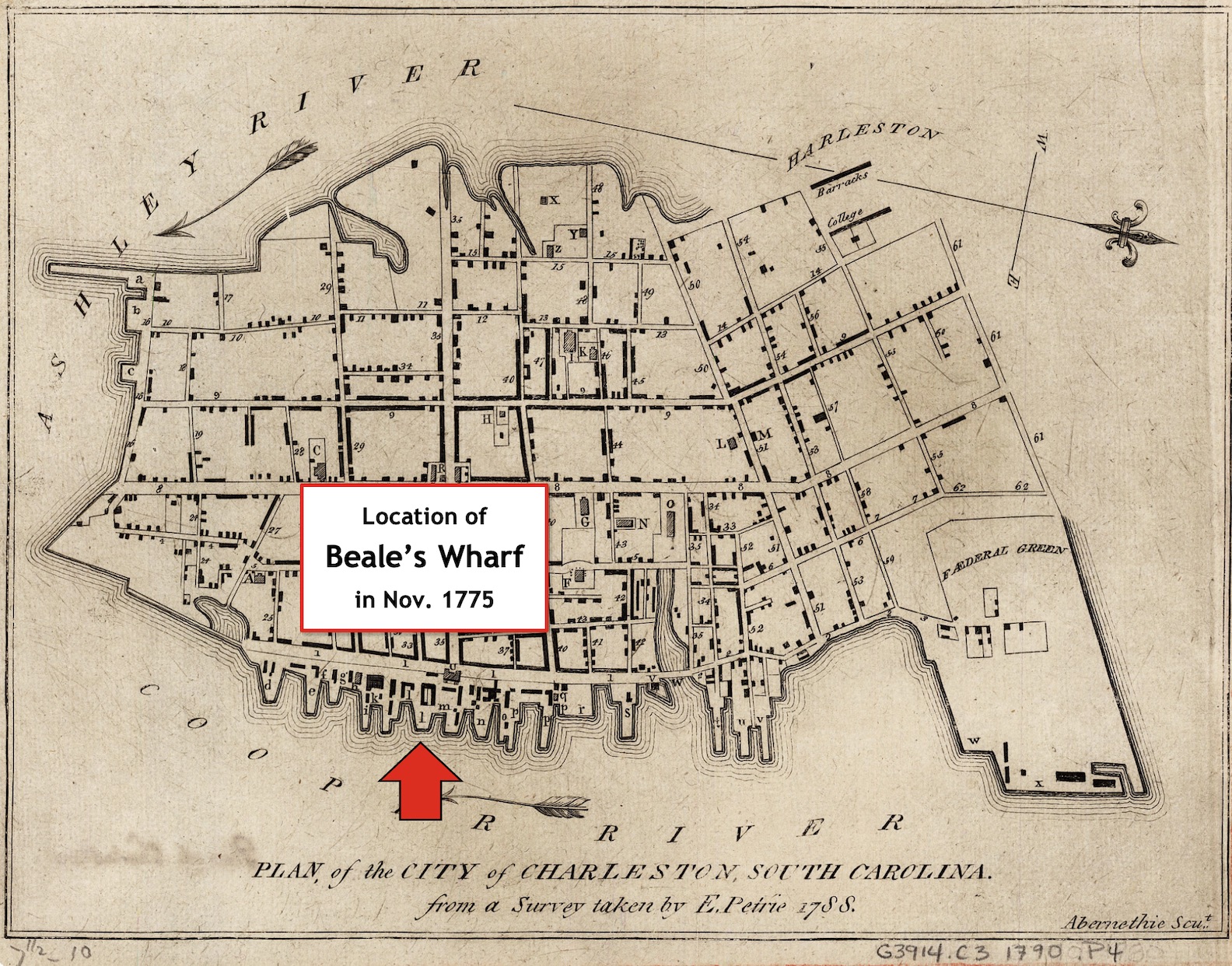
At 8 a.m. on November 12th, the Tamar and Cherokee weighed anchor and “dropt down” to the east, anchoring one hour later abreast the southwestern end of Sullivan’s Island, three-quarters of a mile west-by-north of the Pest House, “as before.” By that time, Captain Tufts had already anchored the Defence “in the stream” off Beale’s Wharf (approximately at the head of the present public pier at the eastern extremity of North Adger’s Wharf), where a crowd of citizens greeted the returning mariners and President Drayton “with three hearty cheers” and ample congratulations.[25]
Among the waterfront spectators that morning were delegates to the Provincial Congress, who reconvened at the State House a few hours later, “in a fit temper, for planning vigorous measures.”[26] Their agenda for the afternoon of November 12th included an oral report from Captain Simon Tufts, narrating the recent naval operations in Hog Island Channel, which Secretary Peter Timothy transcribed with reasonable accuracy. After hearing a summary of the early-morning action, the delegates expressed their thanks to Captain Tufts “for his spirited and prudent conduct upon this occasion,” and to all of the men who participated in the mission. Their bravery under fire from the British warships inspired the Provincial Congress with the martial confidence to prepare immediately for their further defense, including the purchase of another large vessel, the merchant ship Prosper, and the expeditious expansion of Charleston’s waterfront fortifications.[27]
The naval skirmish in Hog Island Channel in mid-November 1775 produced neither human casualties nor significant material damage, but it represented an important tipping point towards open warfare in South Carolina. Contemporary witnesses like physician-historian David Ramsay recognized the act of directing lethal force against fellow British subjects and the king’s warships as a significant escalation in their heretofore cautious rebellion against colonial rule.[28] Similarly, William Henry Drayton and his colleagues in the nascent provincial government described this relatively inconsequential clash as “the actual commencement of hostilities by the British arms in this colony against the inhabitants,” which they considered “an event of the highest moment to the southern part of the United Colonies on this continent.”[29]
Although the efforts to obstruct Hog Island Channel soon proved only partially successful, the bloodless scrape between rebel and loyal forces sharpened their respective appetites for violence and sobered the people of Charleston to the coming storm of war. Tune in next time for the continuation of their story, when the return of the Scorpion in late November 1775 triggered a cascade of panic that exploded the last vestiges of gallant restraint.
[1] Throughout this essay, I have extracted descriptions of Cherokee- and Tamar-related activities, movements, weather conditions, and quotations from five manuscript sources at the National Archives, Kew: Captain’s log (Edward Thornbrough), Tamar, 1775–76, ADM 51/968; Master’s log (Waler Langford), Tamar, 1775–76, ADM 52/2031; Muster books, Tamar, 1775–77, ADM 36/7697; Master’s log (William Pickard), Cherokee, 1775–76, ADM 52/1662; and Muster books, Cherokee, 1775–76, ADM 36/8049; and from two manuscript sources held at the Caird Library and Archives, National Maritime Museum, Greenwich: Lieutenant’s log (John Fergusson), Cherokee, 1775–76, ADM/L/C/284; and Lieutenant’s log (Joseph Peyton), Tamar, 1775–76, ADM/L/T/6.
[2] Lord William Campbell to the Earl of Dartmouth, 19 October 1775, in K. G. Davies, ed., Documents of the American Revolution, 1770–1783, volume 11 (Dublin: Irish Academic Press, 1976), 155–58.
[3] William Moultrie, Memoirs of the American Revolution, So Far as It Related to the States of North and South Carolina, and Georgia, volume 1 (New York: D. Longworth, 1802), 93.
[4] William Moultrie to Henry Laurens, 19 October 1775, in David R. Chesnutt, et al., eds., The Papers of Henry Laurens, volume 10 (Columbia: University of South Carolina Press, 1985), 476.
[5] Council of Safety to William Henry Drayton, 5 September 1775, in Chesnutt, Papers of Henry Laurens, 10: 366.
[6] Henry Laurens to James Laurens, 20 October 1775, in Chesnutt, Papers of Henry Laurens, 10: 478–79.
[7] Henry Laurens to William Moultrie, 19 October 1775, in Chesnutt, Papers of Henry Laurens: 10: 473; Moultrie, Memoirs, 1: 93.
[8] The text of this letter appears in South Carolina Gazette (hereafter SCG), 7 November 1775, page 1; Chesnutt, Papers of Henry Laurens, 10: 504–5.
[9] The text of Calvert’s report appears in SCG, 7 November 1775 (Tuesday), No. 2049, page 1; and in Chesnutt, Papers of Henry Laurens, 10: 505–6. See Lord William Campbell’s letter to the Earl of Dartmouth, 19 October 1775, in Davies, Documents of the American Revolution, volume 11: 157–58.
[10] Edward Thornbrough to Henry Laurens, 1 November 1775, in William Edwin Hemphill and Wylma Anne Wates, eds., Extracts from the Journals of the Provincial Congresses of South Carolina, 1775–1776 (Columbia: South Carolina Department of Archives, 1960), 85–86. This text also appears in SCG, 7 November 1775, pages 1–2.
[11] Hemphill and Wates, Extracts from the Journals of the Provincial Congresses, 88–90. The text of this letter, with slight changes, also appears in SCG, 7 November 1775, page 1.
[12] Hemphill and Wates, Extracts from the Journals of the Provincial Congresses, 92.
[13] Edward Thornbrough to William Henry Drayton, 4 November 1775, in Hemphill and Wates, Extracts from the Journals of the Provincial Congresses, 93–94. This text also appears in SCG, 7 November 1775, pages 1–2.
[14] The master of the Tamar noted in his logbook the pilot boat from Savannah arrived “with Governour Wright,” while the log entries of his colleagues mentioned only the arrival of dispatches from the governor. Wright’s personal appearance in Charleston Harbor at this moment cannot be verified.
[15] The first reference to the armed “pilot boat” Shark appears Captain Thornbrough’s logbook on 6 November 1775, and further mentions of its activities continue therein into the early weeks of 1776.
[16] David Ramsay, The History of the Revolution of South Carolina, from a British Province to an Independent State, volume 1 (Trenton, N.J.: Isaac Collins, 1785), 47; SCG, 14 November 1775, page 3.
[17] Hemphill and Wates, Extracts from the Journals of the Provincial Congresses, 111–12; Moultrie, Memoirs, 1: 101.
[18] John Drayton, Memoirs of the American Revolution, from Its Commencement to the year 1776, Inclusive; As Relates to the State of South-Carolina: And Occasionally Referring to the States of North-Carolina and Georgia, volume 2 (Charleston, S.C.: A. E. Miller, 1821), 70.
[19] Hemphill and Wates, Extracts from the Journals of the Provincial Congresses, 112–13, 117.
[20] Hemphill and Wates, Extracts from the Journals of the Provincial Congresses, 115.
[21] The journals of the first Council of Safety for November 1775 do no survive, but the Council evidently resolved on 10th to sink four schooners in Hog Island Channel, after which then the Provincial Congress resolved, the same evening, to detach troops to support that work; see Ramsay, The History of the Revolution of South Carolina, 1: 49; Drayton, Memoirs, 2: 71; Hemphill and Wates, Extracts from the Journals of the Provincial Congresses, 117, 123; SCG, 14 November 1775, page 3.
[22] The crew of the Defence might have been entirely composed of men drawn from the 1st and 2nd Regiments of South Carolina’s provincial army. In addition to thirty men ordered to that service on 27 October 1775, the Provincial Congress on 9 November ordered Colonel Moultrie to detach thirty-five additional soldiers to the Defence; see Hemphill and Wates, Extracts from the Journals of the Provincial Congresses, 111.
[23] Moultrie, Memoirs, 1: 107.
[24] The foregoing description of the action in Hog Island Creek on 11–12 November 1775 represents a distillation of eight primary sources, recorded by three Americans and five British narrators. Simon Tufts’ report to the Provincial Congress on 12 November 1775, in Hemphill and Wates, Extracts from the Journals of the Provincial Congresses, 119, was edited and augmented by Peter Timothy for publication in his SCG, 14 November 1775, page 3, while John Drayton, Memoirs, 2: 71–74, edited the unpublished memoirs of his father, William Henry Drayton. The aforementioned logbooks of five British naval officers contain slightly-contrasting descriptions of the events in question. Note that the entries recorded by Lieutenant Fergusson and Master Pickard of the Cherokee are nearly identical, as are those of Captain Thornbrough and Master Langford of the Tamar, but the text recorded by Lieutenant Peyton of the Tamar diverges slightly.
[25] Drayton, Memoirs, 2: 73–74.
[26] Drayton, Memoirs, 2: 74.
[27] Hemphill and Wates, Extracts from the Journals of the Provincial Congresses, 120–21.
[28] Ramsay, The History of the Revolution of South Carolina, 1: 47.
[29] William Henry Drayton to the Georgia Council of Safety, 13 November 1775, in Hemphill and Wates, Extracts from the Journals of the Provincial Congresses, 123–24.
NEXT: The Return of the Scorpion in late 1775
PREVIOUSLY: Sullivan's Island, October 1775: An Emergent Loyalist Sanctuary
See more from Charleston Time Machine