
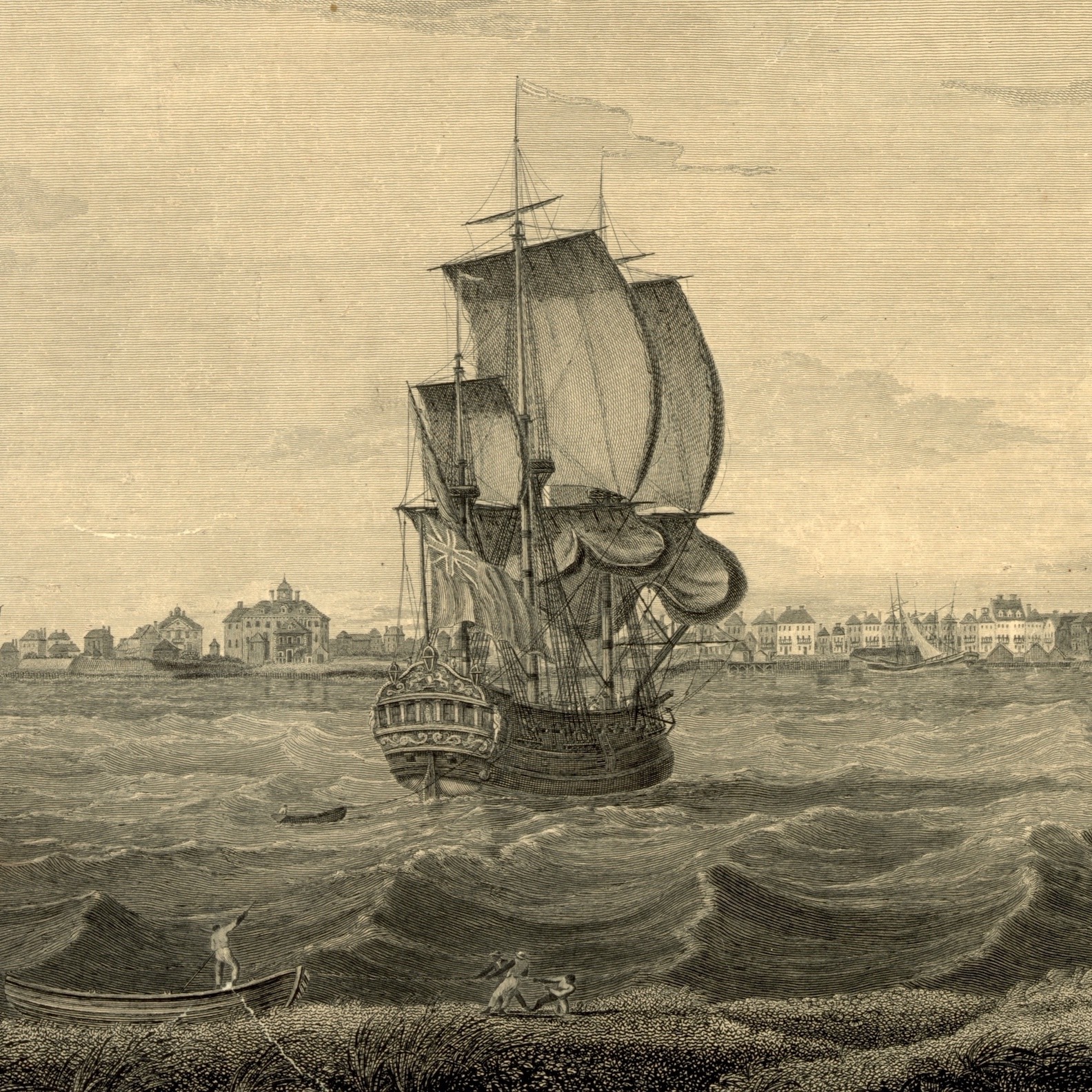
The return of the sloop-of-war Scorpion to South Carolina in late November 1775 heightened rebel fears of an attack on Charleston, but the warship’s real mission was far less threatening. Rather than heralding the imminent arrival of reinforcements from England, the Scorpion delivered news that enraged the colony’s royal governor, while simultaneously accelerating rebel momentum to drive the king’s ships from Rebellion Road.
As I described in the previous episode, the naval skirmish in Charleston Harbor during the early morning hours of 12 November 1775 marked a tipping point in South Carolina’s cautious rebellion against British colonial rule. The exchange of lethal force claimed no casualties, but the clash demonstrated the rebels’ determination to resist Britain’s heavy-handed efforts to suppress American rights. While provincial leaders in the capital congratulated themselves for maintaining a cool demeanor under fire, the king’s mariners in Rebellion Road sought to warn fellow loyalists beyond their reach. On the afternoon of November 13th, station commander Edward Thornbrough deployed the pilot boat Shark with George Walker and three sailors on an “express” mission for Governor Campbell, most likely carrying news of the commencement of hostilities in South Carolina to Crown officials in the neighboring provinces.[1]
The following day, Sailing Master Walter Langford of the Tamar noted that the king’s ships “rec[eive]d information of nine rebels kill’d & several wounded” aboard the schooner Defence during the recent cannonade in Hog Island Creek. That inaccurate information might have traveled from Charleston to the Tamar with four men who boarded the ship on November 14th, “having fled for protection.” Among them were two white harbor pilots named Thomas Keen and Seth Place, whose arrival raised to seven the total number of local pilots sheltering aboard the king’s warships. Like his colleagues in other rebellious colonies, Governor Campbell was actively collecting a pool of loyal pilots to facilitate the penetration of a future Royal Navy squadron, the arrival of which he anticipated at any moment.[2]
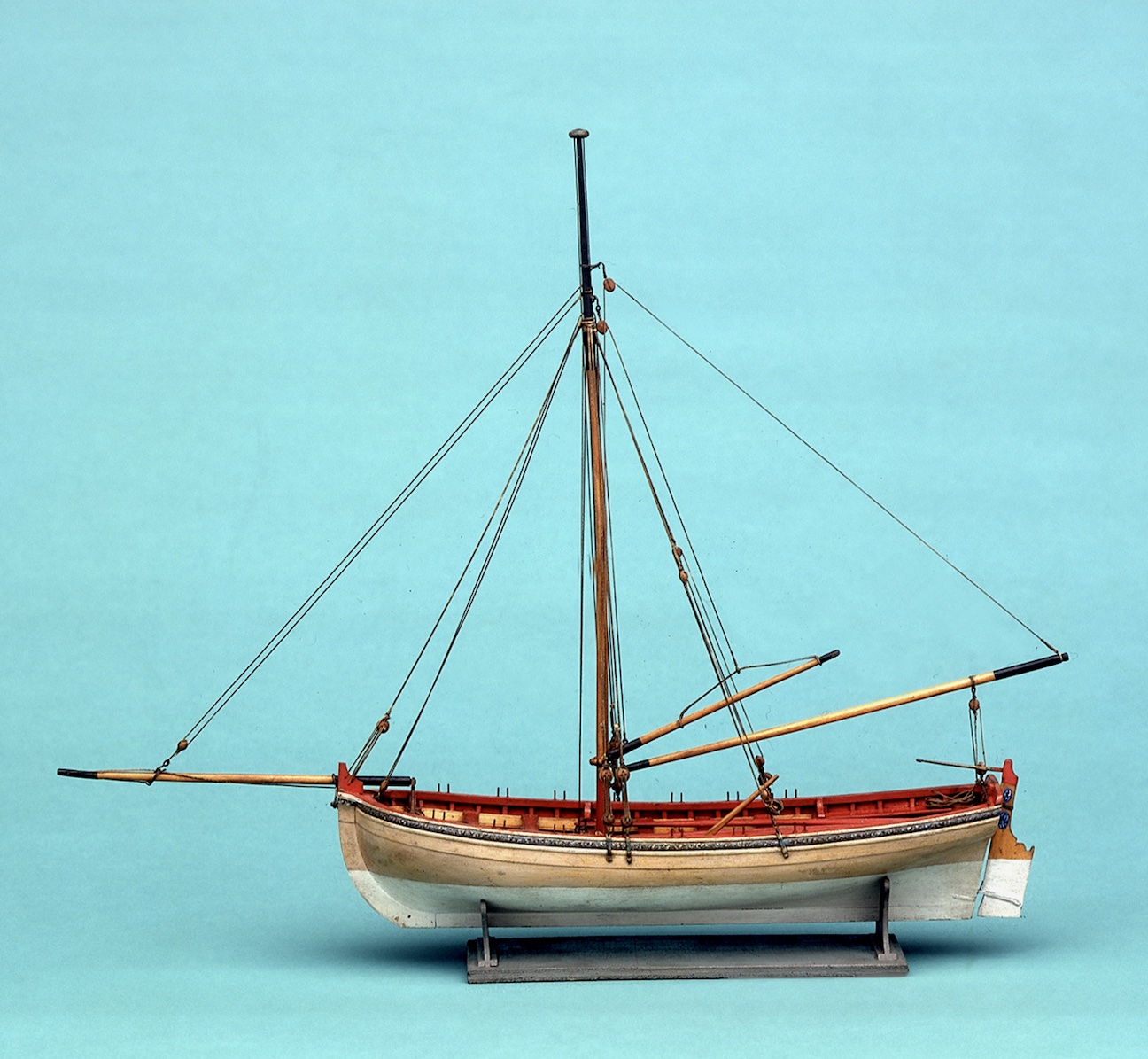
On the cloudy afternoon of November 17th, a small “dispatch boat” flying the king’s colors entered Charleston Harbor and anchored in Rebellion Road near the Tamar. The vessel was actually a “tender” belonging to the sloop-of-war Scorpion, commanded on this occasion by an unidentified midshipman and navigated by an unidentified pilot—almost certainly the Black mariner Sampson Waldron, who had departed from Charleston with the Scorpion more than four months earlier. Their warship was now anchored in the Cape Fear River, just over a hundred nautical miles to the northeast, from whence Captain John Tollemache had dispatched the boat with a few additional seamen the previous day to carry “expresses” to the king’s officers in Charleston Harbor.
The Scorpion’s men informed Governor Campbell and Captain Thornbrough that they had sailed to Boston in July and briefly assisted British efforts to suppress rebel insurgency in that harbor. On August 22nd, Admiral Samuel Graves ordered Captain Tollemache to sail for Cape Fear to relieve the rotting sloop-of-war Cruizer, which the Admiral summoned northward for repairs. The Scorpion departed from Boston the following day and turned southward, in company with the empty transport ship Palliser, but a series of distractions at sea led to a short respite in Bermuda. After the pair arrived at Cape Fear on November 11th, Captain Tollemache sent all the ships’ boats ashore to remove a number of heavy cannons from the smoldering ruins of Fort Johnston, a coastal fort torched by local rebels in mid-July. While the king’s mariners loaded the ordnance into the Palliser for transport back to Boston, Tollemache delivered to Josiah Martin, North Carolina’s royal governor, a letter from General Thomas Gage, discouraging any expectations of British military support from New England.[3]
Governor Martin, who had taken refuge aboard the Cruizer in early June, transferred with his small entourage to the Scorpion on November 14th, creating a dilemma for the ship’s commander.[4] Although Admiral Graves had directed Captain Tollemache to touch briefly at Charleston to deliver a packet of official letters for Edward Thornbrough and Lord William Campbell, Martin was disinclined to stir from the ship’s present station at Cape Fear. By proxy, therefore, the dispatches from North Carolina communicated an important piece of news to the king’s officers in Rebellion Road: Admiral Graves had, three months earlier, ordered the leaky Tamar to sail northward to Boston for much-needed maintenance.
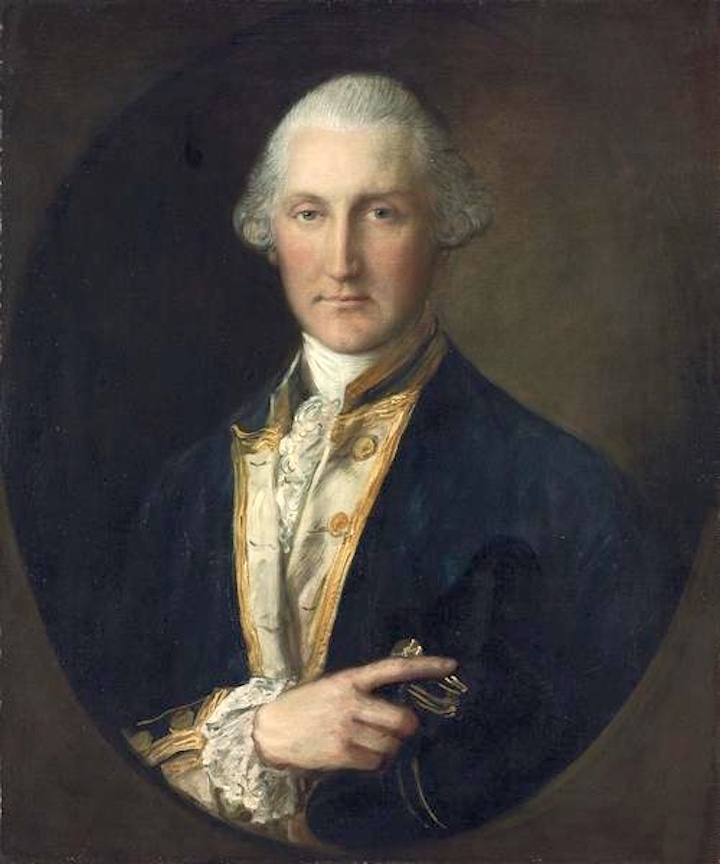
The aged and infirm Captain Thornbrough might have been relieved to hear of his reassignment to a cooler climate, but the proposed evacuation of the Tamar from South Carolina enraged Governor Campbell. Convinced that both the Tamar and the Scorpion were required to maintain the king’s authority in Rebellion Road, Lord William pressed the captain to exercise his authority as commander of his Majesty’s naval forces in the southern colonies and summon Tollemache back to Charleston. Thornbrough complied by drafting a letter directing the Scorpion to return to South Carolina immediately, asserting that he was “under apprehensions of being attacked by vessels the rebels were fitting out at Charles Town against him.” Forty-four hours after its arrival, the dispatch boat from Cape Fear sailed over the bar on the morning of the 19th and turned northward to rejoin the Scorpion.[5]
While the king’s mariners in Rebellion Road awaited the arrival of colleagues from North Carolina, the rebel forces surrounding them grew more assertive by the day. The recent efforts of South Carolina’s fledgling provincial navy to obstruct navigation through the Hog Island Channel with scuttled schooners did not fully accomplish that goal, but the Council of Safety on November 19th empowered its agents to sink two additional hulks in the shallower Marsh Channel, flowing along the south side of Shute’s Folly near the center of the harbor. In contrast to the hostile response from the Tamar and Cherokee when similar work commenced near Hog Island one week earlier, provincial mariners scuttled the additional hulks in the Marsh Channel on November 21st without any manner of interference from the British warships anchored two miles to the east.[6]
At the same time, crewmen aboard the Cherokee commenced “barricadoing the ship” with palmetto logs—that is, erecting one or more makeshift barricades athwart the deck. Neither Lieutenant John Fergusson nor Sailing Master William Pickard explained the rationale behind this work, which they mentioned again on December 11th, but the circumstances of that moment suggest two contrasting potential purposes. They might have erected the palmetto-log structures to create a place of refuge for crewmen defending the ship against hostile boarding parties. Alternatively, the wooden partitions in question could have functioned like the “barricados” frequently found on slave ships of that era, dividing the deck into segregated spaces for the accommodation of passengers Black and White, male and female. Using palmetto logs harvested from Sullivan’s Island, the king’s mariners might have constructed crude pens to shelter some of the enslaved runaways who gathered near the Pest House during the final months of 1775.

Amidst the sawing and hammering of spongy wooden logs athwart the Cherokee’s deck, Lieutenant Fergusson and Master Pickard paused to witness the debut of a prototype for South Carolina’s distinctive state flag, fluttering in a mild breeze above James Island. As I described more fully in Episode No. 313, both officers noted in their respective logbooks that “the rebels at Fort Johnson hoisted their provincial colours,” on the fair morning of November 22nd, describing the novel banner as “a white crescent in a green field.”[7]
Meanwhile, back at the State House in the capital, members of the South Carolina Provincial Congress debated another navigational issue related to the entrance of Charleston Harbor. The executive Council of Safety had, in early July, questioned several local pilots “as to the effect the removal or taking away the beacon on Middle Bay Island might have.”[8] The beacon in question was a simple but stout wooden structure flanked by a number of distinct trees, standing a short distance to the east of a brick lighthouse erected in 1768 near the southeastern shore of what is now called Morris Island.[9] Oceanic mariners approaching the harbor located the main shipping channel through the bar by sighting an alignment of the beacon or “leading mark” with the taller lighthouse behind, much like the two-part sight atop the barrel of a gun. To frustrate any British warships attempting to enter the harbor, the Provincial Congress resolved on November 23rd that the “leading marks over Charles-Town Bar” should be “forthwith cut down and demolished,” and ordered the local Commissioners of the Pilotage to execute the work. Officers aboard the Cherokee, anchored nearly five miles north of the lighthouse, noted that “the bar b[e]acon was cut down” at 4 p.m. on the afternoon of the 27th, a fact confirmed in the Provincial Congress the following day.[10]
Two-and-a-half hours after the destruction of the leading-mark beacon, officers aboard the Scorpion and Palliser gained sight of the Charleston lighthouse and anchored offshore, estimating their position some eight or nine miles to the east-by-south of the landmark tower. The warship fired two cannons to signal its arrival to the Tamar in Rebellion Road, and crept several miles closer to the lighthouse the following morning, but stormy weather and rough seas obliged Captain Tollemache to delay their entrance into the harbor for several days.
In the meantime, the appearance of two unidentified ships offshore, both flying the distinctive swallow-tailed pennant of the Royal Navy, triggered a wave of dread within the capital. On November 28th, members of the Provincial Congress debated a raft of new defensive measures involving all of the white male citizens of urban Charleston and the coastal parishes to the north and south. Convinced that “an attack is apprehended” from British forces, the Congress resolved to draft immediately one-third of the provincial militia into active service, to erect additional fortifications along the Charleston waterfront, and to require residents of the various sea islands “to erect look-outs at the same places, and cause the same signals of alarm and notices to be given, as have been usual in time of war.” Another defensive measure sparked a chain of events that precipitated the first casualties of the revolution in South Carolina: To John Allston of Craven County, captain of a newly-raised volunteer company of “foot rangers” or “rovers” who dressed “after the Indian manner,” President William Henry Drayton issued orders to “scour the sea-coast from Sewee Bay to Haddrel’s [sic] Point in Charles-Town Harbour”—a distance of approximately seventeen miles—“to repel the landing of men from British armed vessels, [and] to prevent their depredations.”[11]
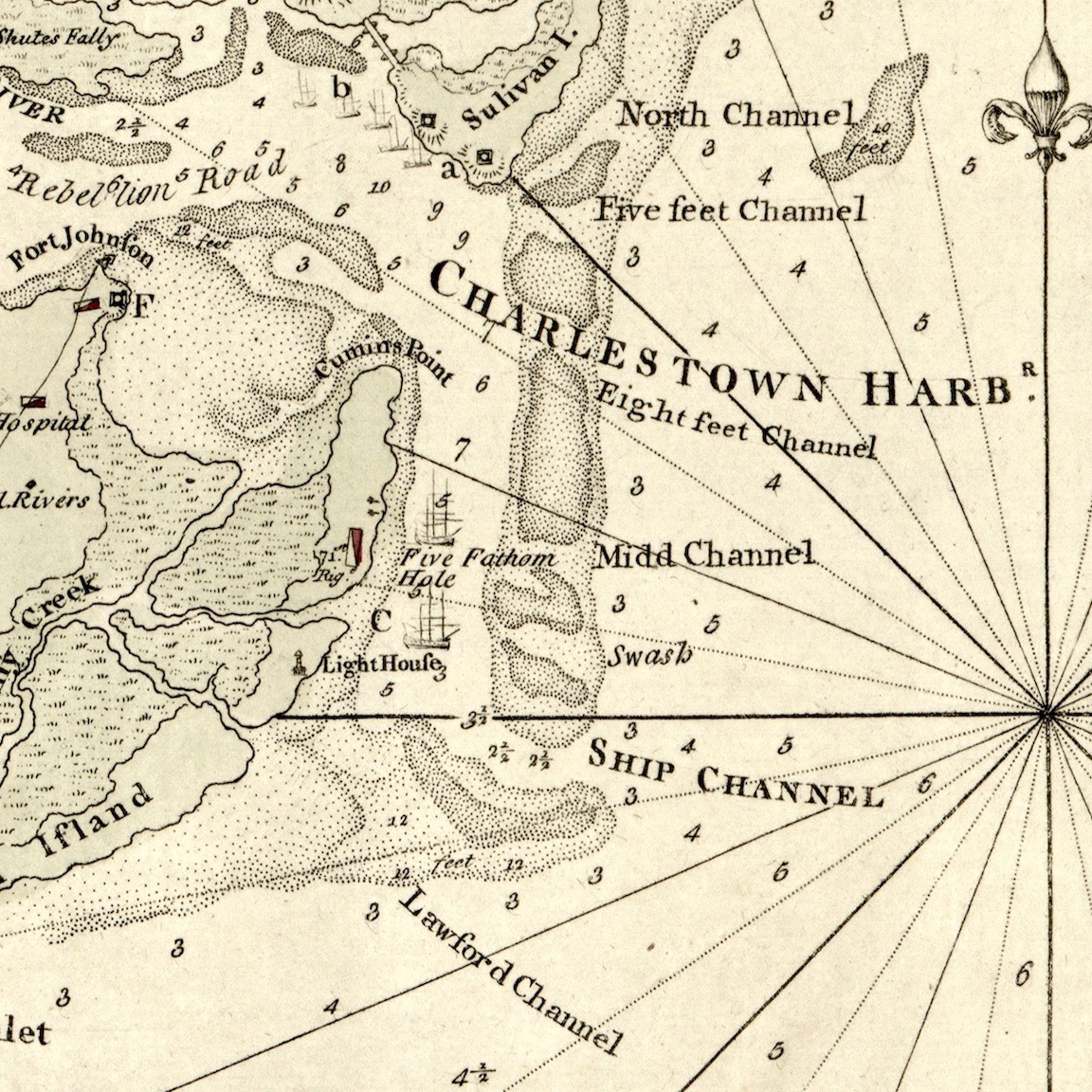
At dawn on November 29th, Captain Thornbrough dispatched Lieutenant Joseph Peyton “with pilots” and twenty men from the Tamar to sail the prize schooner Polly beyond the bar to assist the Scorpion and Palliser. The destruction of the leading-mark beacon days earlier complicated their efforts to locate the main ship channel into the harbor, but the veteran pilots on hand no doubt recalled navigational strategies employed long before the erection of the helpful lighthouse in 1768. With a team of unidentified pilots at the helm, the Scorpion weighed anchor on the morning of November 30th and made sail for the bar. Although the ship struck one of the shoals bounding the channel and was briefly “in stays,” its sails flapping in the sea breeze, crewmen quickly changed their tack and resumed the serpentine path into the harbor. After anchoring in Rebellion Road, near the southwest end of Sullivan’s Island, Captain Tollemache dispatched an officer and twenty-eight seamen to join those “in the Tamers [sic] tender, to protect the transport.” The Palliser, laden with numerous heavy cannon, also struck the bar during its noon passage on December 1st, inspiring the ship’s master, Walter Waters, to raise a signal of distress. A cutter dispatched from the Cherokee joined the tender Polly in correcting the transport’s course, allowing the Palliser to join the small crowd of British ships in Rebellion Road by 2 p.m.[12]
The king’s officers floating in Charleston Harbor, including Governor Josiah Martin, gathered to exchange salutations and discuss news of the American rebellion. While sojourning in Boston Harbor, Captain Tollemache had received a commission from Admiral Graves to command the Scorpion, and welcomed aboard a new lieutenant, James Drew, who transferred from the admiral’s flagship. Tollemache confirmed to his colleagues that Graves had ordered the Scorpion to remain at Cape Fear to support the royal governor of North Carolina, returning to Charleston only to deliver new orders summoning the Tamar northward. Captain Thornbrough opened his sealed instructions, dated August 22nd, to verify the admiral’s surprising command. The Tamar was indeed required to proceed “as soon as possible” with the Scorpion to Cape Fear, and from thence to escort the sloop-of-war Cruizer and the transport Palliser “with all convenient haste to Boston.”
Because these changes would diminish the strength of the Royal Navy in South Carolina, Admiral Graves had, months earlier, addressed a letter to Lord William Campbell, which Captain Tollemache now delivered to his former commander. “It gives me particular uneasiness,” wrote Graves, that “I am under the necessity of ordering the Tamar hither,” but the ship’s “very bad condition,” as reported by Captain Thornbrough, rendered the voyage necessary. The admiral acknowledged that, “for a small time only, your Lordship will be without any king’s ship on the Carolina station, but whenever the [Boston] squadron is reinforced, or I am otherwise enabled, you may depend upon having every assistance in my power.” In closing, Graves asked Campbell “to consider in its true light the urgent necessity of calling away the Tamer [sic], in whose room I will send the very first sloop I have to spare.”[13]
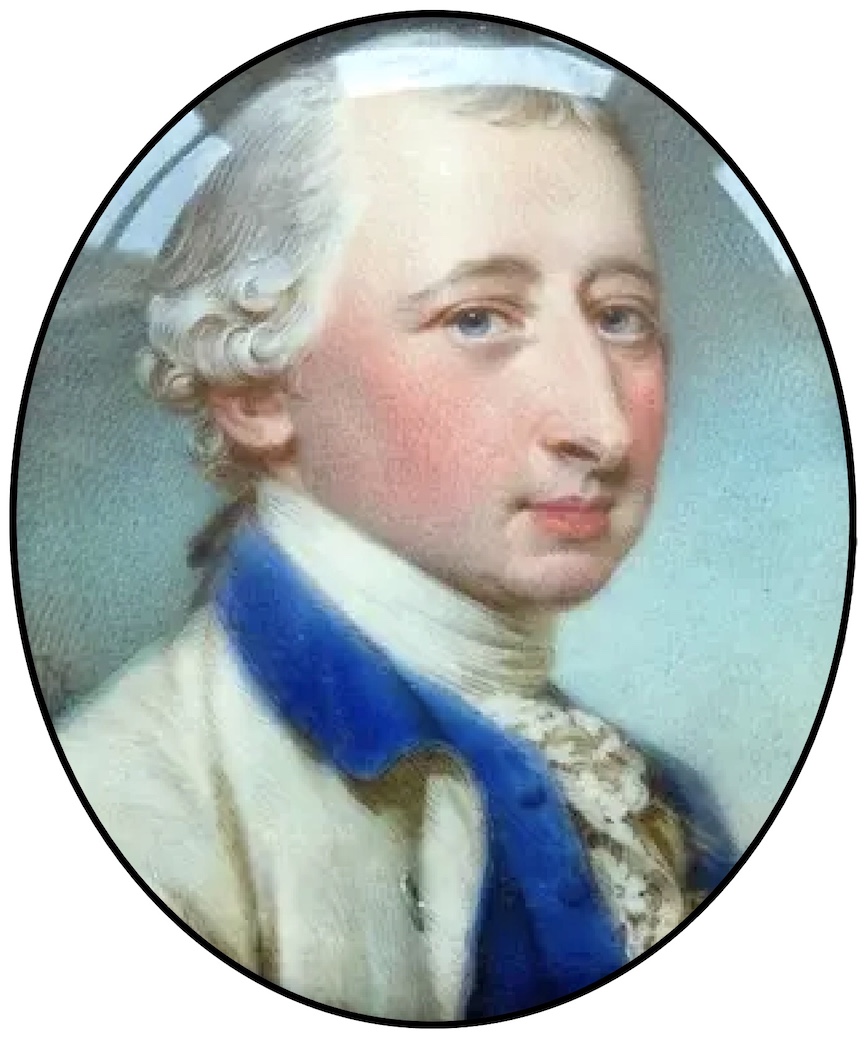
The orders dispatched by Admiral Graves in late August 1775 sparked a heated debate between the governors of the two Carolinas during the early days of December. Lord William Campbell asserted that both the Tamar and the Scorpion should remain at Charleston to keep the harbor open to British shipping and to await reinforcements from England. Governor Martin, on the other hand, urged Captain Thornbrough to obey his orders from the admiral and prepare both warships for an immediate return to Cape Fear. Campbell countered that the colony of South Carolina was more important, both strategically and economically, than its northern neighbor, and therefore required more naval protection. Martin dismissed such comparisons as irrelevant, especially in light of their most recent orders from Boston. Noting that the Scorpion had departed from Cape Fear at the urgent request of Captain Thornbrough, Martin said he had accompanied the warship to Charleston to “remonstrate against her detention from her station,” and “to inform myself of the measures for his Majesty’s service that Lord William Campbell had most pressingly invited me to consult with him upon.” On his arrival at Rebellion Road, however, Martin was dismayed to learn that “Capt. Thornbrough had ordered the Scorpion there at the instance of Lord William Campbell more than from any apprehensions he himself entertained of the naval force of the Rebels.”[14]
Although Josiah Martin argued convincingly for a strict adherence to the orders issued by Admiral Graves, he could not ignore one important counterpoint raised by Lord William: The proposed withdrawal of both the Tamar and the Scorpion from South Carolina at that moment was tantamount to the king’s abandonment of the colony. The rebels who had driven the governor from his office in Charleston would surely interpret the departure of one or both of the warships as a sign of weakness, undermining Campbell’s efforts to preserve the last vestiges of royal authority in the province. To resolve their stalemate, both governors turned to Edward Thornbrough, commander of his Majesty’s naval force in the region, to render a deciding opinion. The senior captain directed the Scorpion to return to Cape Fear, as instructed by Admiral Graves, but, interpreting a modicum of leeway in his orders, elected to detain the Tamar at Charleston and support the efforts of Governor Campbell.[15]
While the governors and naval officers debated during the early days of December, mariners aboard the Scorpion and transport Palliser shared supplies of gunpowder, cannon shot, provisions, and rum with their colleagues aboard the Tamar and Cherokee. From the cache of ordnance acquired by the Palliser at Bermuda and Cape Fear, the Cherokee also received four light cannons that increased its modest armament to twelve carriage-mounted guns. Crewmen from the Scorpion “erected a tent” on Sullivan’s Island on December 2nd, no doubt in proximity to the Pest House, where dozens of white loyalists and runaway slaves gathered daily to draw fresh water from its communal well.[16]
The continuing growth of a refugee population of Sullivan’s Island, encouraged by frequent boat traffic from the king’s warships anchored nearby, inspired rebel leaders in Charleston to consider some means of disrupting the loyalist sanctuary. Months earlier, the General Committee had briefly considered a proposal to establish a gun battery at the southeastern edge of Haddrell’s Point, the mainland closest to Sullivan’s Island, but the idea was abandoned in early October along with the flawed plan to obstruct the bar of Charleston Harbor.[17] On the afternoon of December 2nd, however, the executive Council of Safety resolved to move forward with the proposed battery, appointing commissioners to plan the structure and supervise its construction during the ensuing weeks.[18]

Although rebel leaders in the capital and at Fort Johnson were not privy to the debate between the royal governors of North and South Carolina, they witnessed some evidence of change in Rebellion Road on December 4th. That morning, the Scorpion fired a six-pounder and loosened the top of the foretopsail, customary gestures signaling the ship’s imminent departure. While Captain Tollemache and Lieutenant Drew supervised preparations aboard ship and on Sullivan’s Island, the purser, Henry Searle, applied to the local victualling contractor, William Price, for a large supply of beef and other bulk provisions to sustain the crew during the coming four months, per orders from Admiral Graves.[19] Although Mr. Searle’s requisition followed standard naval procedure of that era, the volume of provisions in question exceed that permitted by South Carolina’s rebel government. On September 16th, one day after Governor Campbell’s exodus from the capital, the General Committee of Charleston had resolved to limit the flow of victuals to the king’s ships in quantities sufficient “only for daily consumption.” A subsequent compromise enabled the contractor to provision each warship fortnightly, but that increased volume was still far short of the large supply demanded by Henry Searle. When William Price sought permission on December 5th to provision the departing Scorpion as requested, the Council of Safety embraced the opportunity to annoy their British frenemies. To the victualling contractor and his naval customers, the Council ordered “that no permit be given for any greater quantity of provisions to be supplied [to] the King’s ships, than is allowed by the resolution of the General Committee of the 16th September last.”[20]
By permitting henceforth only daily supplies of provisions to flow from urban Charleston to the warships in Rebellion Road, rebel leaders refined an existing non-violent strategy to hasten the voluntary departure of the king’s representatives from South Carolina. While this passive-aggressive policy succeeded in vexing scores of hungry loyalists lingering in the harbor and on Sullivan’s Island, the measure also reminded British officers of their relative weakness, thereby wounding the pride of men accustomed to colonial deference to their royal authority. They might have survived, albeit in a state of dietary dependence, for some time, but frustration with sustained provincial insolence provoked the king’s mariners to retaliate against innocent civilians.
Driven by pangs of hunger and humiliation, men loyal to the British Crown launched a series of illegal seizures and nocturnal raids during the second week of December 1775 that terrorized local residents and inspired rebel reprisals. At its climax, the accelerating tide of violence persuaded Lady William Campbell and her children to flee the capital in darkness and join the governor in the harbor. Join me next time for the continuation of their story, recounting the final days of diplomacy preceding the eviction of royal authority from South Carolina.
[1] Captain Thornbrough’s Tamar logbook, ADM 51/968, at the National Archives, Kew, noted the departure of the Shark at 9 p.m. under the nautical date of 14 November 1775 (i.e., the evening of the 13th, according to civil time-keeping), and noted its return “from St. Augustine” on 21 January 1776.
[2] “Pilot[s] Extra” Thomas Keen and Seth Place first appear in Muster books, Tamar, 1775–77, ADM 36/7697, under the date 14 November 1775, along with Doctor John Buchanan and Midshipman Christopher Halliday, of HMS Mercury, who had arrived at Charleston in October 1773 with his father, Robert Halliday, Collector of His Majesty’s Customs for the port of Charleston; see South Carolina Gazette, 11 October 1773, page 3.
[3] Admiral Samuel Graves to Captain John Tollemach, 22 August 1775, in ADM 1/485 at the National Archives, Kew; Josiah Martin to the Earl of Dartmouth, 12 November 1775, in William Bell Clark, ed., Naval Documents of the American Revolution, volume 2 (Washington, D.C.: U.S. Government Printing Office, 1966), 1001–2.
[4] Captain Tollemache’s Scorpion log, ADM 51/872, at the National Archives, Kew, records a fifteen-gun salute for the arrival of Governor Martin on 14 November 1775, but the Muster books, Scorpion, 1775–76, ADM 36/8377, record his arrival on November 21st with a “retinue” of five other supernumeraries—James Biggleston, William Thomas, John Rich, Robert Jones, and Thomas Wright.
[5] Josiah Martin to the Earl of Dartmouth, 12 January 1776, in William Bell Clark, ed., Naval Documents of the American Revolution, volume 3 (Washington, D.C.: U.S. Government Printing Office, 1968), 759.
[6] Barnard Elliott to Henry Laurens, 2 December 1775, in David R. Chesnutt, et al., eds., The Papers of Henry Laurens, volume 10 (Columbia: University of South Carolina Press, 1985), 528–29, articulates a proposal to augment the obstructions in Hog Island Creek. John Drayton, Memoirs of the American Revolution, volume 2 (Charleston, S.C.: A. E. Miller, 1821), 70–71, mistakenly dated the order to obstruct the Marsh Channel as 19 October rather than 19 November. According to a report in South Carolina and American General Gazette, 17–24 November 1775, page 1, that task was accomplished on November 21st.
[7] Lieutenant’s log (John Ferguson), Cherokee, 1775–76, ADM/L/C/284, Caird Library and Archive, National Maritime Museum, Greenwich.
[8] Journal of the Council of Safety, 9 July 1775, in Collections of the South Carolina Historical Society, volume 2 (Charleston: South Carolina Historical Society, 1858), 35.
[9] Proposals for erecting a beacon or “leading mark” appear in South Carolina Gazette, 27 April 1769, page 1; and 9 August 1770, page 6. Governor Campbell mentioned “the landmark trees that direct the pilots in passing the bar of this harbour” in his letter to the Earl of Dartmouth, 19 July 1775, in K. G. Davies, ed., Documents of the American Revolution, 1770–1783, volume 11 (Dublin: Irish Academic Press, 1976), 51. For more information about the lighthouse, see Kevin P. Duffus, The 1768 Charleston Lighthouse: Finding the Light in the Fog of History (Cruso, N.C.: Looking Glass Productions, 2023).
[10] William Edwin Hemphill and Wylma Anne Wates, eds., Extracts from the Journals of the Provincial Congresses of South Carolina, 1775–1776 (Columbia: South Carolina Department of Archives, 1960), 148, 159.
[11] Hemphill and Wates, Extracts from the Journals of the Provincial Congress, 158–60; Henry Laurens to Andrew Williamson, 2 December 1775, in Chesnutt, Papers of Henry Laurens, 10: 528; “Miscellaneous Papers of the General Committee, Secret Committee and Provincial Congress, 1775 (Continued),” South Carolina Historical and Genealogical Magazine 9 (July 1908): 116–17.
[12] The name of the master of the Palliser appears in Admiral Samuel Graves to Captain John Tollemach, 22 August 1775, in ADM 1/485, at the National Archives, Kew.
[13] See Graves’ letters of 22 August 1775 to John Tollemache, Edward Thornbrough, and Lord William Campbell, all transcribed in William Bell Clark, ed., Naval Documents of the American Revolution, volume 1 (Washington, D.C.: U.S. Government Printing Office, 1964), 1200–4.
[14] Josiah Martin to the Earl of Dartmouth, 12 January 1776, in Clark, Naval Documents of the American Revolution, 3: 759.
[15] See the letters of Lord William Campbell to Josiah Martin, and Josiah Martin to Lord William Campbell, both dated 1 December 1775, in Clark, Naval Documents of the American Revolution, 2: 1225–27; see also Martin’s aforementioned letter to Lord Dartmouth, 12 January 1776, and Lord William Campbell to the Earl of Dartmouth, 1 January 1776, in Clark, Naval Documents of the American Revolution, 3: 568–69.
[16] On 5 and 10 December 1775, the Cherokee logbook of Master William Pickard, ADM 52/1662 at the National Archives, Kew, identified the four additional guns as four-pounders, but they were identified as six-pounders in the Journal of the Second Council of Safety, 6 December 1775, in Collections of the South Carolina Historical Society, 3: 57–58.
[17] R. W. Gibbes, Documentary History of the American Revolution . . . 1764–1776 (New York: Appleton, 1885), 204; Drayton, Memoirs, 2: 58, 163.
[18] Journal of the Second Council of Safety, 2 December 1775, in Collections of the South Carolina Historical Society, 3: 40.
[19] William Moultrie, Memoirs of the American Revolution, volume 1 (New York: D. Longworth, 1802), 108–9.
[20] Journal of the Second Council of Safety, 5 December 1775, in Collections of the South Carolina Historical Society, 3: 51.
PREVIOUSLY: Firefight in Hog Island Channel: South Carolina's Tipping Point to War with Britain
See more from Charleston Time Machine